Oct 15 2025
/
High-Density Cabling for Next-Gen AI Data Centers
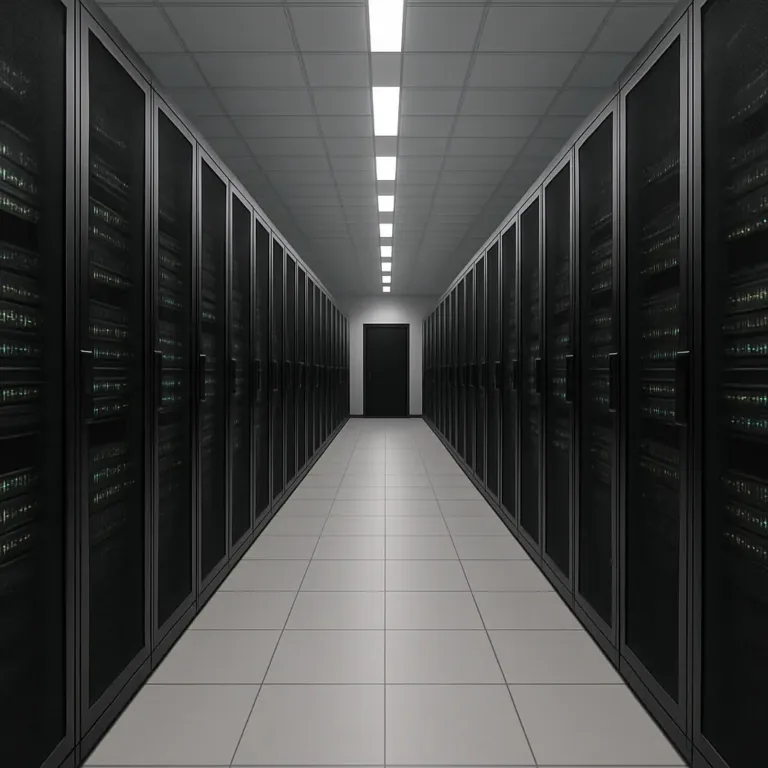
The rise of artificial intelligence is placing unprecedented demands on data center infrastructure. AI and machine learning workloads require massive amounts of data to be processed at incredible speeds, pushing traditional data center designs to their limits. The physical layer, particularly the cabling infrastructure, is now a critical bottleneck that can either enable or inhibit the performance of these next-generation facilities.
This post will explore the unique challenges AI poses for data center cabling and highlight the high-density solutions designed to meet these demands. We will cover the importance of selecting the right cabling, the key technologies available, and best practices for implementation. For data center managers and IT professionals, understanding these concepts is essential for building a scalable and future-proof infrastructure ready for the AI revolution.
The Unique Demands of AI on Data Center Cabling
AI workloads, such as training large language models (LLMs) or running complex simulations, are fundamentally different from traditional enterprise applications. They involve massive parallel processing across thousands of interconnected GPUs, all communicating simultaneously. This creates a need for an underlying network fabric that can support immense bandwidth, low latency, and high scalability.
Several factors contribute to these heightened requirements:
- Massive Bandwidth Needs: AI clusters require ultra-high-speed connections, often starting at 400G and moving towards 800G, 1.6T, and beyond. The sheer volume of data transferred between GPUs during training can saturate conventional networks.
- Low Latency is Critical: For AI models to train efficiently, communication between nodes must be nearly instantaneous. Any delay, or latency, can lead to processing bottlenecks, idle GPUs, and significantly longer training times, increasing operational costs.
- Scalability Challenges: AI clusters are constantly growing. The cabling infrastructure must be able to scale easily to accommodate more GPUs and higher networking speeds without requiring a complete overhaul of the existing setup.
- Thermal Management: Densely packed racks filled with high-performance GPUs generate enormous amounts of heat. High-density cabling solutions can potentially obstruct airflow if not managed properly, complicating cooling efforts and impacting performance.
Essential High-Density Cabling Solutions for AI
To address these challenges, the industry has developed specialized high-density cabling solutions. These technologies are designed to maximize connectivity within a limited space, providing the performance and scalability needed for AI data centers.
MPO/MTP Connectors
Multi-fiber Push-On (MPO) connectors, and their enhanced version MTP (Multi-fiber Termination Push-in), are the cornerstone of high-density fiber optic cabling. A single MPO/MTP connector can terminate multiple fibers (from 8 to 32 or more), consolidating numerous connections into one compact interface.
Feature | Advantage for AI Data Centers |
|---|---|
High Fiber Count | A single connector can replace multiple duplex connectors, drastically reducing the physical space needed for connections. |
Rapid Deployment | Pre-terminated MPO/MTP trunk cables allow for quick plug-and-play installation, significantly speeding up deployment and scaling of AI clusters. |
Migration Path | MPO/MTP connectors provide a clear upgrade path from 40G/100G to 400G/800G and beyond, protecting the initial investment. |
Reduced Cable Congestion | Fewer, more compact cables improve airflow and make cable management simpler, which is crucial for cooling high-power AI racks. |
Very Small Form Factor (VSFF) Connectors
As port densities on switches and servers increase, the size of the optical transceiver and its connector becomes a limiting factor. Very Small Form Factor (VSFF) connectors, such as CS, SN, and MDC connectors, are designed to address this. They offer a much smaller footprint than traditional LC connectors, allowing for more connections in the same amount of rack space. For instance, a QSFP-DD or OSFP transceiver, common in 400G/800G applications, can use these smaller connectors to break out into multiple lower-speed channels within a single module. This is vital for connecting numerous GPUs back to a single switch port.
Armored Fiber Optic Cables
The data center environment can be harsh. Cables can be crushed, bent, or damaged during installation or maintenance, leading to costly downtime. Armored fiber optic cables provide an extra layer of protection with a built-in metal tube, making them more resilient to physical stress. While slightly less flexible, their durability makes them an excellent choice for critical connections within an AI data center, ensuring network reliability.
Designing a Future-Proof High-Density Cabling Infrastructure
A successful high-density cabling deployment for AI requires careful planning and adherence to best practices.
1. Adopt a Structured Cabling Approach
A structured cabling system provides an organized, standardized approach to your data center’s physical layer. By creating a logical and hierarchical design with main distribution areas (MDAs), horizontal distribution areas (HDAs), and equipment distribution areas (EDAs), you create a system that is easy to manage, troubleshoot, and scale. This modularity is perfect for the dynamic needs of AI infrastructure, allowing for new racks or clusters to be added without disrupting the entire network.
2. Prioritize Cable Management
In a high-density environment, effective cable management is not just about aesthetics; it is crucial for performance and reliability. Poorly managed cables can block airflow, leading to overheating and equipment failure. They can also make moves, adds, and changes (MACs) difficult and risky. Utilize high-capacity cable managers, overhead pathways, and proper labeling to keep your infrastructure organized and accessible.
3. Plan for Future Speed Migrations
The pace of innovation in AI is relentless. A network built for today’s 400G requirements will soon need to support 800G, 1.6T, or even faster speeds. When selecting your cabling, choose solutions that offer a clear and cost-effective upgrade path. Using high-quality, high-fiber-count MPO/MTP backbones and modular patch panels allows you to adapt to new transceiver technologies and higher speeds by simply swapping out cassettes and patch cords, rather than replacing the entire trunk infrastructure.
4. Test and Certify Every Connection
Every decibel of signal loss matters in a high-performance network. Before going live, it is essential to test and certify every link to ensure it meets the performance standards required for high-speed data transmission. This proactive step helps identify and resolve potential issues like dirty connectors or faulty terminations, preventing performance degradation and ensuring the reliability of your AI workloads.
Building the Foundation for Tomorrow’s AI
As AI continues to transform industries, the data centers that power it must evolve. High-density cabling is no longer an option but a fundamental requirement for building a robust, scalable, and high-performance AI infrastructure. By embracing solutions like MPO/MTP connectors and adopting a forward-thinking, structured design, organizations can build a physical layer that not only supports their current AI initiatives but is also ready for the innovations of tomorrow.
Frequently Asked Questions
What is the main difference between MPO and MTP connectors?
MTP is a brand name for a high-performance MPO connector developed by US Conec. It includes several enhancements over a standard MPO connector, such as tighter tolerances, a removable housing for easier re-working, and improved mechanical performance. For mission-critical AI applications, MTP connectors are often preferred for their superior reliability and durability.
Can I use my existing LC cabling for an AI data center?
While LC connectors are still used, particularly for lower-speed connections, they are not suitable for the high-density requirements of modern AI clusters. The physical size of LC connectors limits the port density on networking equipment. High-density solutions like MPO/MTP are necessary to achieve the scale required for 400G/800G networking.
How does fiber type (e.g., OM4, OM5) affect AI data center performance?
The fiber type determines the bandwidth and the distance the signal can travel. For modern AI data centers using multimode fiber, OM4 and OM5 are the recommended choices. OM5, also known as wideband multimode fiber, is optimized for short-wavelength division multiplexing (SWDM), which can increase the capacity of each fiber. Choosing the right fiber type is critical for ensuring your cabling can support future speed upgrades.
Are MPO and MTP connectors compatible with each other?
Yes, MPO and MTP connectors are physically compatible with one another, as they share the same basic design and dimensional standards. However, using an MTP connector can provide additional benefits like improved performance and reliability, so it is recommended to pair components of the same type when high performance is required.
How many fibers can an MPO or MTP connector support?
MPO and MTP connectors typically support fiber counts ranging from 8 to 72, with some configurations capable of supporting even higher fiber counts. Common options include 12-fiber and 24-fiber connectors, which are widely used in data center and AI applications for their scalability and high-density capabilities.