


Dec 06 2025
/
Armored Fiber Optic Cable: Everything You Need to Know
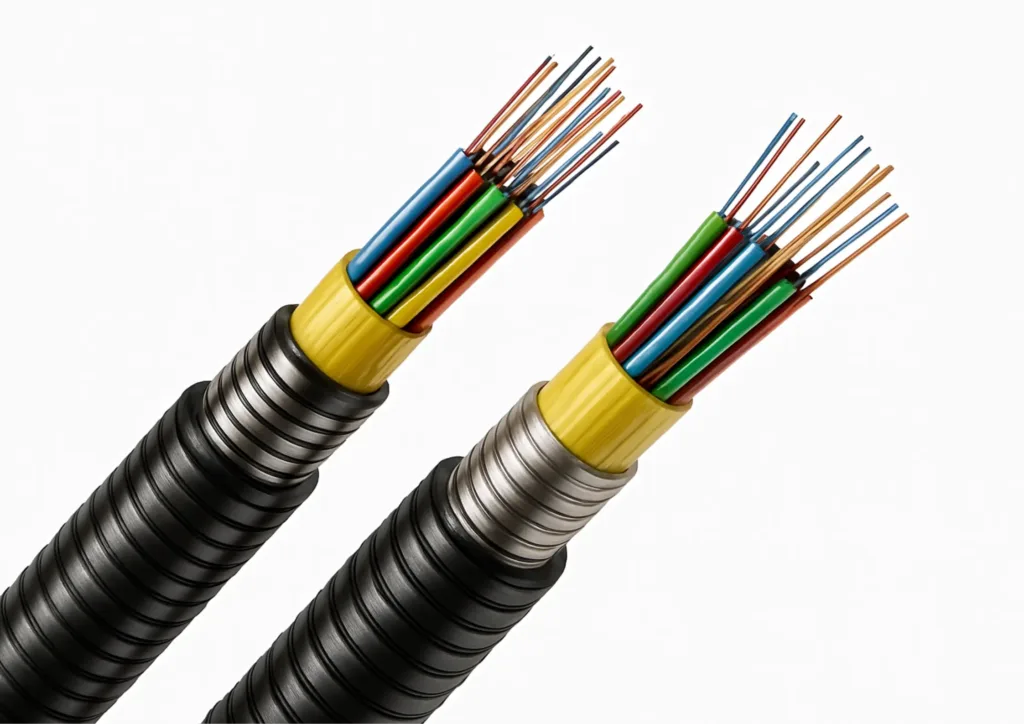
In the world of networking, fiber optic cables are celebrated for their ability to transmit massive amounts of data at incredible speeds. However, their delicate glass fibers are vulnerable to damage from physical stress, moisture, and pests. This is where armored fiber optic cables come in, providing a robust solution for deploying networks in challenging environments.
This guide will cover everything you need to know about armored fiber optic cables. We will explore what they are, how they are constructed, their key benefits, and the various applications where they excel. Whether you are planning a network installation in an industrial facility, an outdoor campus, or any area with a high risk of cable damage, understanding this technology is essential. By the end of this post, you will have a clear picture of why armored cables are a smart investment for protecting your network infrastructure.
What is an Armored Fiber Optic Cable?
An armored fiber optic cable is a specialized type of fiber optic cable that includes an extra layer of protection to shield the fragile optical fibers inside. This “armor” is typically made of steel, either as a corrugated tube or interlocking strips, wrapped around the standard cable core. The primary purpose of this armor is to provide enhanced resistance against crushing, impact, moisture, and rodent attacks, making the cable suitable for harsh and demanding environments.
Unlike standard fiber cables that rely solely on a plastic jacket for protection, armored cables offer a more rugged and durable alternative. This added defense ensures the integrity and performance of your network, even when the cable is buried directly in the ground, run through industrial conduits, or exposed to potential physical hazards.
Understanding the Structure of Armored Cables
The construction of an armored fiber optic cable is what sets it apart. While designs can vary slightly, most armored cables share a multi-layered structure designed for maximum protection.
Core Components
At the very center are the optical fibers themselves. These are the strands of glass or plastic that transmit data as pulses of light. They are housed within a buffer tube, which is often filled with a water-blocking gel to protect against moisture.
The Armor Layer
This is the defining feature of the cable. The armor is applied over the inner jacket and buffer tubes. There are two main types of armor:
- Interlocking Armor: This design consists of helically wrapped aluminum or steel tape that interlocks to form a strong yet flexible tube. It provides excellent crush and impact resistance and is commonly used in indoor and general-purpose applications where some flexibility is required.
- Corrugated Armor: This type uses a steel tape that is folded into a corrugated, or wavy, pattern and welded into a sealed tube around the cable core. Corrugated steel armor offers superior protection against rodents and is highly resistant to moisture penetration, making it ideal for direct burial and outdoor installations.
Outer Jacket
The final layer is a durable outer jacket, typically made from materials like Polyethylene (PE) or Polyvinyl Chloride (PVC). This jacket provides the first line of defense against environmental factors like UV radiation, abrasion, and chemicals. The material is chosen based on the specific application requirements, such as flame resistance for indoor use or weather resistance for outdoor deployment.
Key Benefits of Armored Fiber Optic Cables
Integrating armored fiber optic cables into your network design offers several significant advantages that justify the investment. These benefits contribute to a more reliable, durable, and cost-effective network over the long term.
Enhanced Durability and Protection
The most obvious benefit is superior physical protection. The steel armor layer provides exceptional resistance to crushing forces, impacts, and tension. This means the cable can withstand the rigors of installation and the ongoing pressures of its environment, from being stepped on in a busy data center to being buried under soil and rock.
Rodent Resistance
Rodents chewing through cables is a surprisingly common cause of network outages, especially in outdoor and agricultural settings. The hard steel armor on these cables acts as an effective barrier, preventing rodents from gnawing through to the delicate optical fibers and saving you from costly repairs and downtime.
Moisture and Water Protection
Many armored cable designs, particularly those with corrugated armor, offer excellent protection against moisture ingress. The welded steel tube creates a hermetic seal, while water-blocking gels and tapes inside provide a secondary defense. This makes them perfect for direct burial applications or deployment in damp environments like tunnels and conduits.
Simplified Installation
While it may seem counterintuitive, using armored cables can actually simplify the installation process. Because of their inherent toughness, armored cables can often be buried directly in the ground without the need for expensive and labor-intensive conduit. This can lead to significant savings in both material costs and installation time.
Common Applications for Armored Cables
The rugged nature of armored fiber optic cables makes them the preferred choice for a wide range of applications across various industries.
- Direct Burial: For long-distance network runs between buildings or across a campus, direct burial is often the most efficient method. Armored cables are designed to be placed directly into a trench, eliminating the need for protective conduits.
- Industrial Environments: Factories, manufacturing plants, and processing facilities are filled with heavy machinery, high foot traffic, and potential chemical exposure. Armored cables can withstand these harsh conditions, ensuring reliable network connectivity for control systems and data communication.
- Outdoor and Harsh Weather Deployments: When running cables outdoors, whether up a communication tower or along a bridge, they are exposed to sun, rain, wind, and temperature fluctuations. The robust construction of armored cables ensures they can handle these environmental challenges.
- Data Centers: Even within a controlled environment like a data center, cables can be subjected to accidental crushing or damage under raised floors or in crowded cable trays. Interlocking armored cables provide an extra layer of security to protect critical network links.
- Telecommunications Backbone: Major telecom providers rely on armored fiber to protect their core network infrastructure, which often runs underground along highways or through urban areas where digging and construction pose a constant threat.
Your Trusted Partner for Networking Solutions
Choosing the right cable is just one part of building a resilient and high-performance network. It’s equally important to partner with a distributor that understands the unique challenges of your region and provides access to world-class technology.
At Magnus Gulf, we are dedicated to empowering businesses across the Middle East and Africa with cutting-edge networking, IP telephony, and security solutions. Headquartered in Dubai, our team offers expert support, fast service, and trusted industry experience to ensure your projects are a success. We partner with top global brands to bring you the best products, including a comprehensive range of fiber optic solutions designed for any environment. Let us help you build a network that stays ahead in a rapidly evolving digital landscape.
Frequently Asked Questions
1. Is armored fiber optic cable difficult to install?
Not necessarily. While the armor adds some weight and stiffness, it can simplify installation by allowing for direct burial without conduit. Standard tools are used for stripping and termination, though specific tools designed for cutting the armor layer are recommended for efficiency and safety.
2. Can armored fiber optic cables be used indoors?
Yes, absolutely. Interlocking armored cables are frequently used for indoor applications, especially in data centers, industrial settings, or any high-traffic area where cables need extra protection. It’s important to select a cable with a flame-retardant outer jacket (like Plenum or Riser rated) to comply with building safety codes.
3. How does the cost of armored cable compare to standard fiber?
Armored fiber optic cables are more expensive than their non-armored counterparts due to the additional materials and manufacturing processes involved. However, this higher upfront cost is often offset by savings on installation (by avoiding conduit) and long-term maintenance, as the cables are less likely to be damaged.
4. Does the metal armor interfere with the data signal?
No, the metal armor does not interfere with the optical signal. The data is transmitted as pulses of light through the glass fibers, which are immune to electromagnetic interference (EMI). The armor’s purpose is purely for physical protection.
5. What is the difference between single-mode and multi-mode armored cable?
The difference is the same as with standard fiber optic cables and relates to the size of the core and how light travels through it. Single-mode armored cable has a smaller core and is used for long-distance transmissions, while multi-mode armored cable has a larger core and is used for shorter distances, such as within a building or campus. The choice between them depends entirely on your network’s distance and bandwidth requirements.