

May 14 2026
/
What Is AWG? Understanding Ethernet Cable Gauge
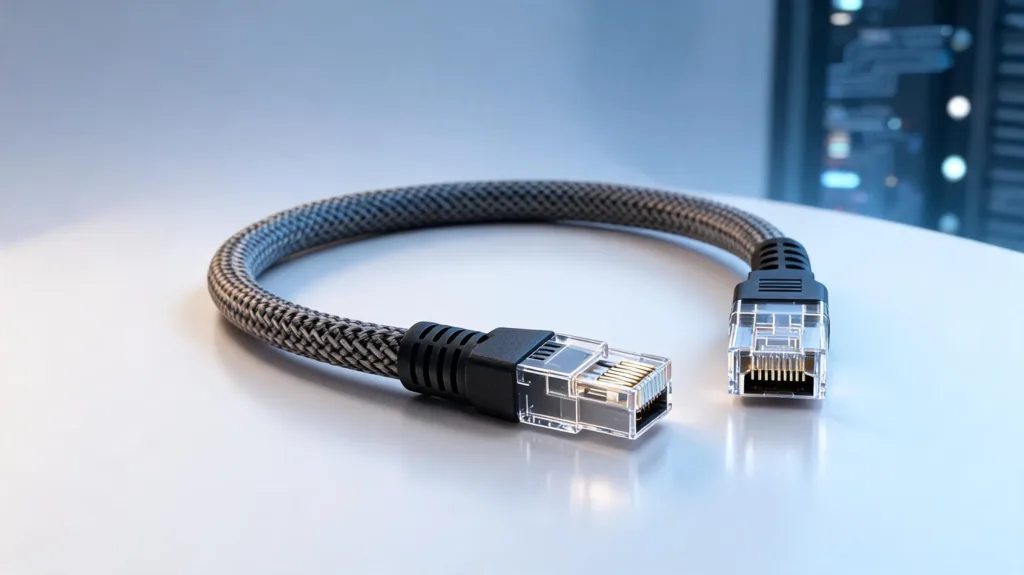
AWG, or American Wire Gauge, is a standardized measuring system that determines the diameter of electrically conducting wires. In the context of Ethernet cables, the AWG rating indicates the thickness of the internal copper conductors. A lower AWG number designates a thicker wire, which provides less electrical resistance and supports more reliable data transmission over extended distances.
Key Highlights
- Inverse Measurement System: The AWG scale operates inversely; smaller numbers indicate thicker wires, while larger numbers represent thinner wires.
- Impact on Power over Ethernet (PoE): Thicker cables (lower AWG) are exceptionally suited for PoE applications because they dissipate heat more effectively and minimize power loss.
- Network Infrastructure Optimization: Selecting the correct wire gauge ensures reliable signal integrity, minimizes crosstalk, and maximizes the operational lifespan of enterprise networking environments.
Overview and Introduction
When establishing a robust IT infrastructure, selecting the appropriate networking cables requires careful consideration of various technical specifications. Among the most critical metrics is the American Wire Gauge (AWG). Established in the mid-19th century, this standard dictates the physical dimensions of round, solid, nonferrous electrical wire. For network engineers and system integrators, understanding AWG is fundamental to designing reliable, high-performance data networks.
The thickness of the copper conductors inside an Ethernet cable directly influences its electrical characteristics. Thicker conductors facilitate better signal strength over long runs and handle electrical currents safely. Conversely, thinner conductors offer greater flexibility and occupy less space, making them highly desirable for high-density environments. Balancing these requirements is essential for ensuring that networking equipment functions at peak efficiency. Our commitment at Magnus Infotech is to empower our partners with the precise technical knowledge required to make informed, strategic infrastructure decisions.
Types of Ethernet Cable Gauges
Ethernet cables typically utilize a specific range of wire gauges, each engineered to serve distinct networking requirements.
- 23 AWG: This gauge is highly prevalent in Category 6 (Cat6) and Category 6a (Cat6a) cables. The thicker copper wire supports higher frequencies and 10-Gigabit data transmission. It is the premier choice for backbone cabling and applications requiring substantial Power over Ethernet (PoE) capabilities.
- 24 AWG: Widely utilized in Category 5e (Cat5e) and standard Cat6 cables, 24 AWG strikes an optimal balance between performance and flexibility. It is the standard choice for general office networking, connecting workstations to local switches with dependable reliability.
- 26 AWG: Typically found in stranded patch cables, 26 AWG wire is thinner and highly flexible. This gauge is strictly intended for short distances, such as connecting patch panels to networking switches within a server rack, rather than for long structural wire runs.
- 28 AWG: Known commonly as “slim” or “ultra-slim” cables, 28 AWG wires are incredibly thin. They drastically improve airflow and reduce clutter in high-density data centers. However, their high electrical resistance restricts their use to very short distances and limits their PoE compatibility.
Comparison of Common AWG Sizes
Factor | Option 1: 23 AWG | Option 2: 24 AWG | Option 3: 28 AWG |
|---|---|---|---|
Conductor Diameter | 0.57 mm | 0.51 mm | 0.32 mm |
Flexibility | Low (Stiff) | Moderate | High (Very Flexible) |
Maximum Distance | 100 meters | 100 meters | < 15 meters |
PoE Suitability | Excellent (PoE++, high power) | Good (Standard PoE) | Poor (Not recommended) |
Primary Application | Backbone & structural wiring | General network distribution | High-density server racks |
How the AWG Standard Works
Understanding the manufacturing and classification process provides clarity on why gauge matters for signal integrity.
- Step 1: Wire Drawing Process: Copper wire manufacturing begins with a solid copper rod. The rod is pulled through a series of specialized drawing dies. Each successive die has a smaller diameter than the previous one, gradually stretching and thinning the copper.
- Step 2: Assigning the Gauge: The number of drawing operations determines the final gauge. A wire that passes through 24 progressive dies is designated as 24 AWG. Consequently, a higher number of drawing steps results in a higher AWG number and a thinner wire.
- Step 3: Integration into Ethernet Cabling: Once drawn to the precise specification, the copper conductors are insulated, twisted into distinct pairs to mitigate electromagnetic interference, and sheathed in a protective outer jacket to create the final Ethernet cable.
Use Cases and Applications
Selecting the correct AWG is paramount for delivering seamless technology solutions across various environments.
- High-Power Data Centers: Environments prioritizing structural integrity and high-bandwidth capabilities, such as core data centers, rely heavily on 23 AWG solid cables. These cables manage the rigorous demands of 10GBASE-T networks and PoE++ applications without overheating.
- High-Density Server Racks: In enterprise server rooms where space is at a premium and cooling airflow is critical, 28 AWG slim patch cables provide the perfect solution. They allow for exceptionally neat cable management over short distances.
- Enterprise Office Deployments: General office buildings and horizontal cabling infrastructures typically employ 24 AWG cables. They offer a reliable blend of durability, manageable flexibility, and cost-effectiveness for everyday data transmission.
Benefits of Choosing the Correct Gauge
Partnering with the right infrastructure components yields significant operational advantages.
- Enhanced Signal Integrity: Utilizing thicker wires for long distances significantly reduces signal attenuation. This ensures data packets reach their destination without corruption or packet loss, maintaining consistent network speeds.
- Thermal Management for PoE: Devices such as IP cameras, wireless access points, and VoIP phones draw power directly through the network cable. Thicker conductors (like 23 AWG) present less electrical resistance, minimizing heat generation and mitigating the risk of cable degradation or fire hazards.
- Optimized Space Utilization: Selecting thinner gauges for short patch connections ensures that networking cabinets remain organized. Proper cable management directly contributes to better equipment cooling and easier maintenance protocols.
Challenges and Limitations
Deploying networking cables also presents specific physical and logistical challenges that system integrators must navigate.
- Physical Constraints and Bend Radius: Thicker cables, such as 23 AWG, are inherently stiff. Navigating them through tight conduits or sharp corners can be challenging, and exceeding the maximum bend radius can permanently damage the internal copper pairs.
- Cost Implications: Copper is a valuable commodity. Cables with lower AWG ratings contain significantly more copper mass, resulting in higher procurement costs for extensive network installations.
- Distance Limitations on Thin Cables: While 28 AWG cables provide unmatched flexibility, their high electrical resistance restricts their effective transmission distance. Using them for long structural runs will result in severe signal degradation and network failure.
Trends and Future Scope
The networking industry continuously evolves to meet the demands of modern enterprise computing.
- The Rise of Slim Cabling: As data centers grow increasingly dense, the demand for 28 AWG and even 30 AWG patch cables is surging. Administrators prioritize airflow and cable management, pushing manufacturers to innovate better insulation techniques to compensate for thinner copper.
- Enhanced PoE Demands: The proliferation of IoT devices and smart building technologies requires network cables to carry more power than ever before (up to 90 watts with PoE++). This trend ensures that robust 23 AWG cables will remain the fundamental backbone of new building infrastructure.
Visual Section: Gauge Size to Diameter Relationship
(Note: The following text represents the proportional size difference in AWG diameters.)
AWG Scale Comparison (Diameter in Millimeters):
[==== 23 AWG ====] 0.57 mm (Largest, Lowest Resistance)
[=== 24 AWG ===] 0.51 mm
[== 26 AWG ==] 0.40 mm
[= 28 AWG =] 0.32 mm (Smallest, Highest Resistance)
The visual scale illustrates the inverse relationship characteristic of the American Wire Gauge system. As the physical thickness decreases, the gauge number increases.
Why Choose Magnus Infotech
Welcome to Magnus, your trusted IT distribution partner dedicated to delivering seamless technology solutions. We act as the vital bridge between global technology vendors and regional resellers across the Middle East.
- Strategic Location and Reach: Headquartered in the Al Tawhidi Building on Al Mankhool Street, Dubai, UAE, our central location empowers us to serve system integrators and B2B partners efficiently across the entire Gulf region.
- Unwavering Professional Commitment: Our unwavering commitment is to provide you with an exceptional experience. We do this by delivering unparalleled solutions marked by a seamless blend of quality and value in Networking, Wireless, and Unified Communications.
- Partner-Centric Philosophy: Our partners are at the center of everything we do. This deeply ingrained policy strengthens our market position as a premier Value Added Distributor, ensuring your business receives the cutting-edge technology solutions it deserves.
Reach out to Magnus Infotech today to discuss how our enterprise-grade networking distribution can elevate your next infrastructure project.
Frequently Asked Questions
Does the AWG rating affect my internet speed?
No, the AWG rating does not directly dictate the bandwidth limit provided by your Internet Service Provider. However, using a gauge that is too thin for a long distance can cause signal attenuation, resulting in dropped packets and a perceived slowing of network responsiveness.
Is 23 AWG or 24 AWG better for network installations?
Neither is universally better; they serve different operational purposes. 23 AWG is superior for long structural runs (up to 100 meters) and high-power PoE applications due to its lower resistance. 24 AWG is highly flexible and cost-effective, making it ideal for standard horizontal cabling and shorter connections.
What does standard 24 AWG mean?
A 24 AWG designation means the internal copper wire has a diameter of approximately 0.51 millimeters. It indicates that the wire was drawn through 24 progressive sizing dies during manufacturing. It is the most common gauge utilized in Cat5e and standard Cat6 networking cables.
Can I safely use 28 AWG cables for Power over Ethernet (PoE)?
Using 28 AWG cables for PoE requires strict adherence to specific guidelines. Due to their high electrical resistance, they generate more heat than thicker cables. They should only be used in very small bundles and strictly for short patch connections to prevent overheating and power delivery issues.
How do I choose the correct wire gauge for my project?
Evaluate the required transmission distance, the physical space available for cable routing, and the power requirements of the endpoint devices. For long backbone runs and high-power PoE devices, rely on 23 AWG. For standard office drops, choose 24 AWG. For high-density server patching, utilize 28 AWG.