


Networking & Wireless · Structured Cabling
RJ45 vs RJ11: Essential 2027 Connector Guide
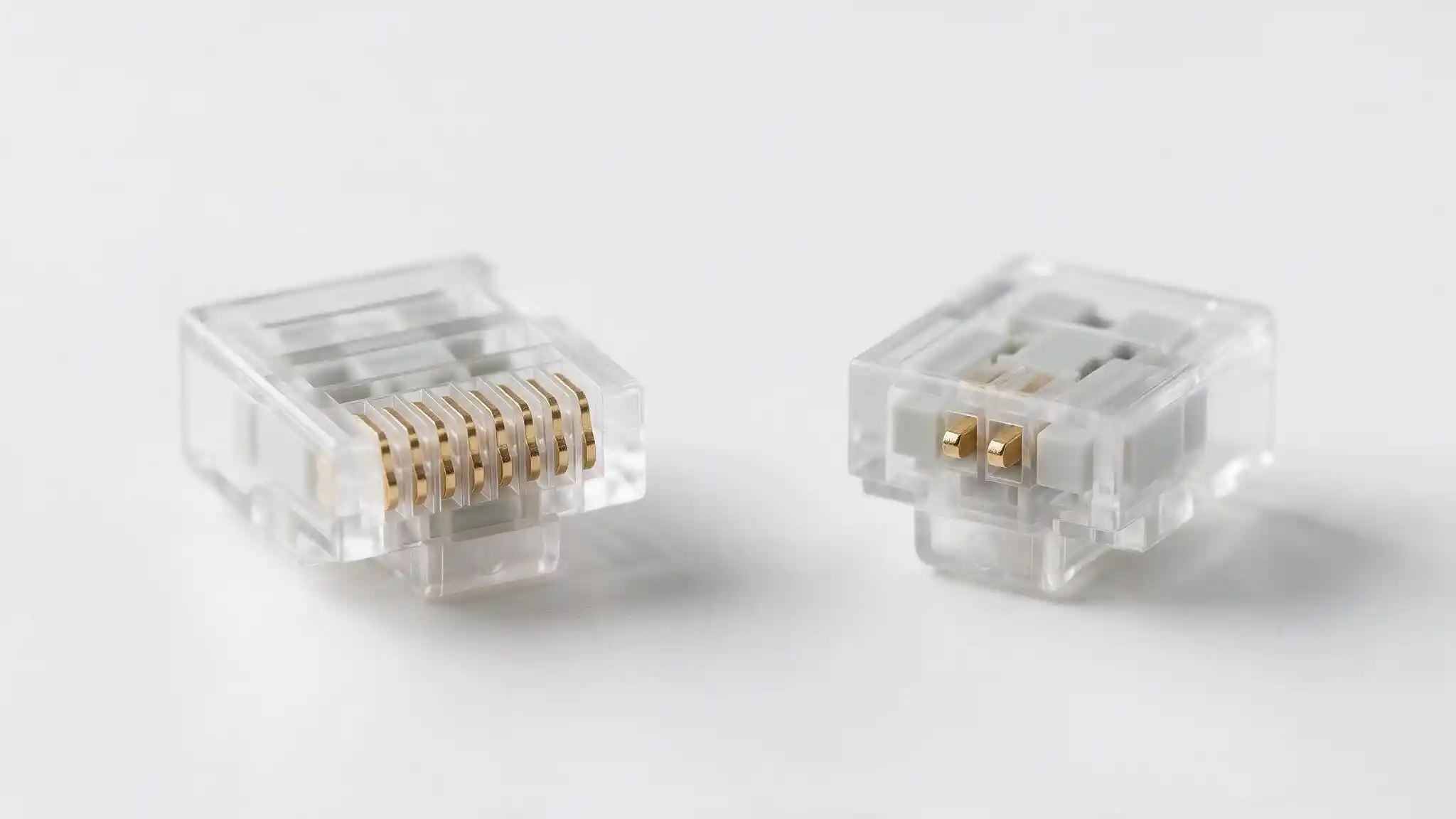
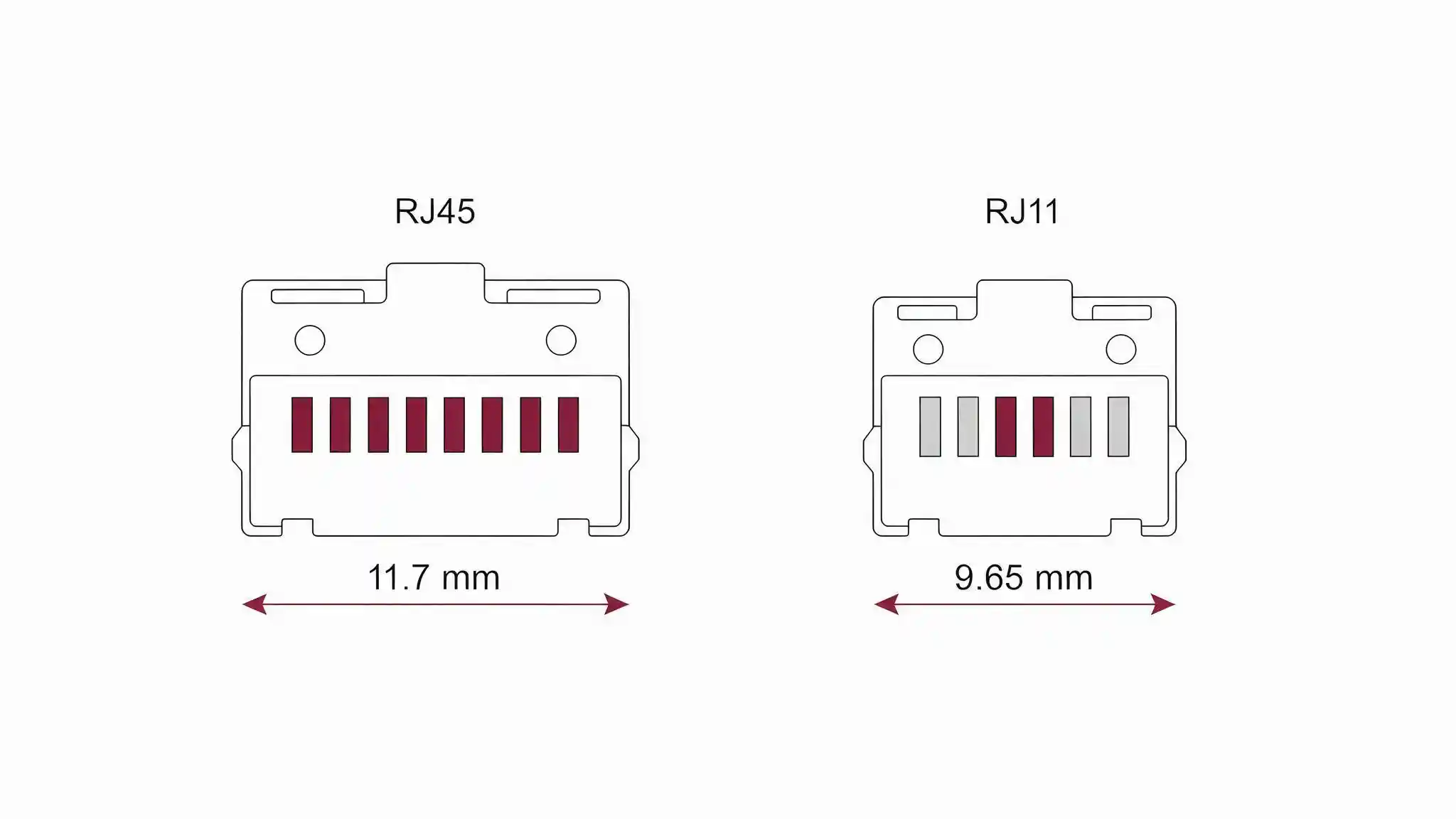
The RJ45 vs RJ11 difference comes down to size and contact count. RJ45 is an 8-position, 8-contact connector carrying four pairs for Ethernet, roughly 11.7 mm wide. RJ11 is a 6-position connector using just the centre two contacts for a single telephone line, roughly 9.65 mm wide. The narrower phone plug will physically click into an Ethernet jack — and that is exactly the habit that damages equipment.
Key takeaways
- RJ45 is 8 positions and 8 contacts. RJ11 is 6 positions and 2 contacts. That is the whole difference in one line.
- The plugs are different widths — about 11.7 mm against 9.65 mm — so they are not interchangeable.
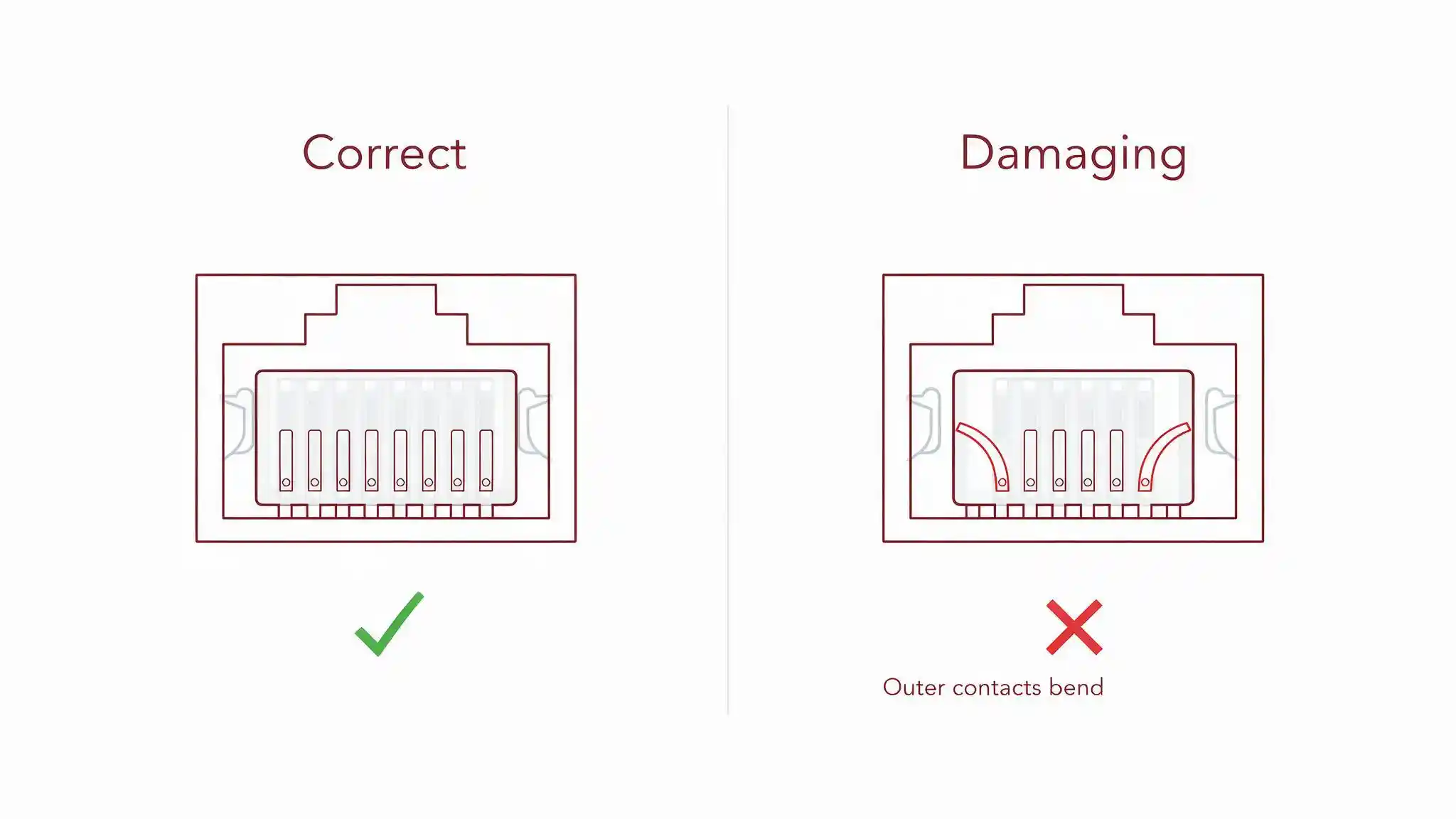
- An RJ11 plug fits into an RJ45 jack. It should not be done: the narrower plug can deform the jack’s outer contacts.
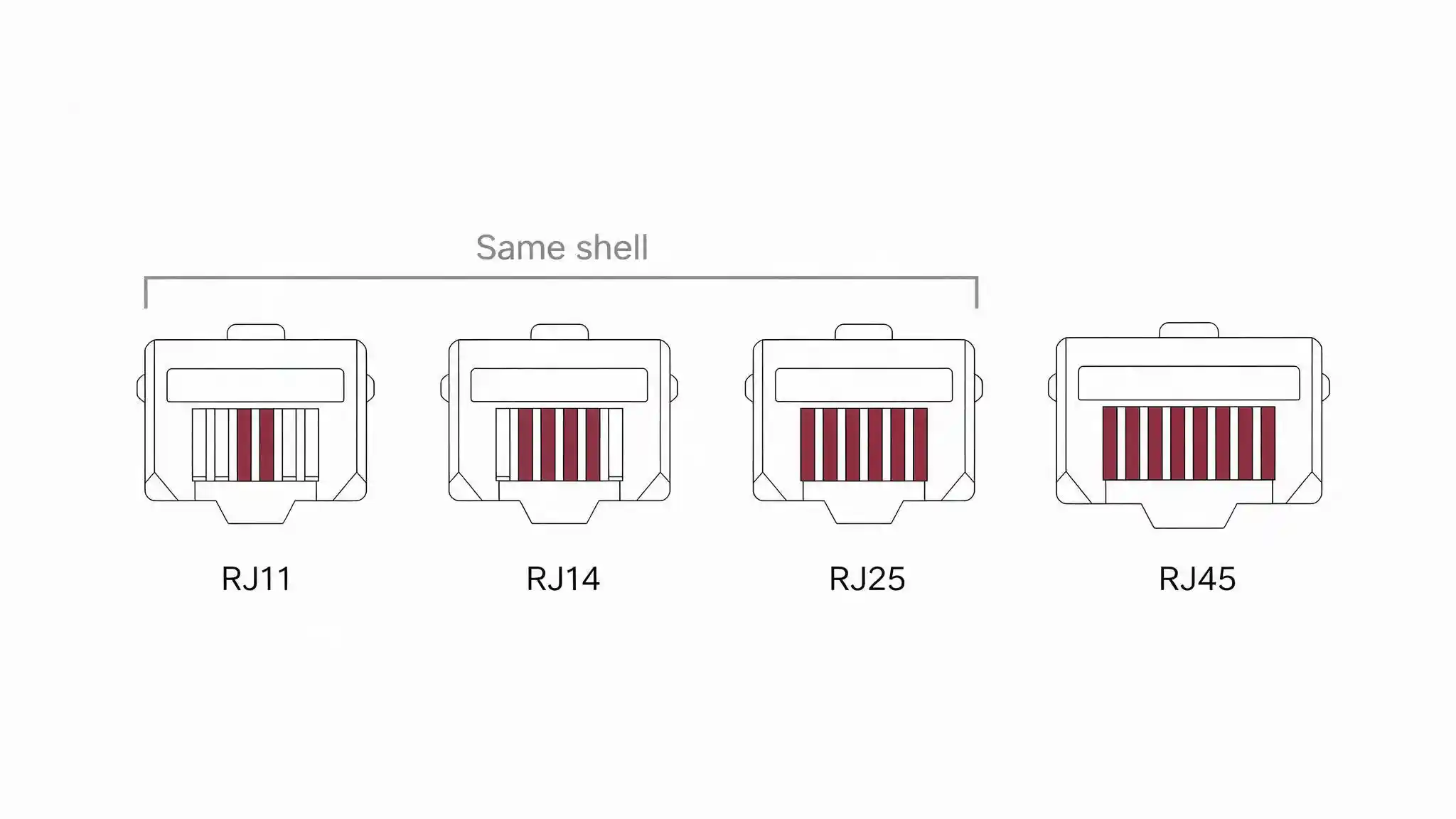
- RJ11, RJ14 and RJ25 share one physical shell. Only the number of loaded contacts changes.
- “RJ45” is a misnomer. The connector everyone calls RJ45 is properly an 8P8C modular connector.
RJ45 vs RJ11: the short answer
Both are modular connectors from the same family, and they look similar enough at a glance to cause genuine confusion on site. The difference is straightforward.
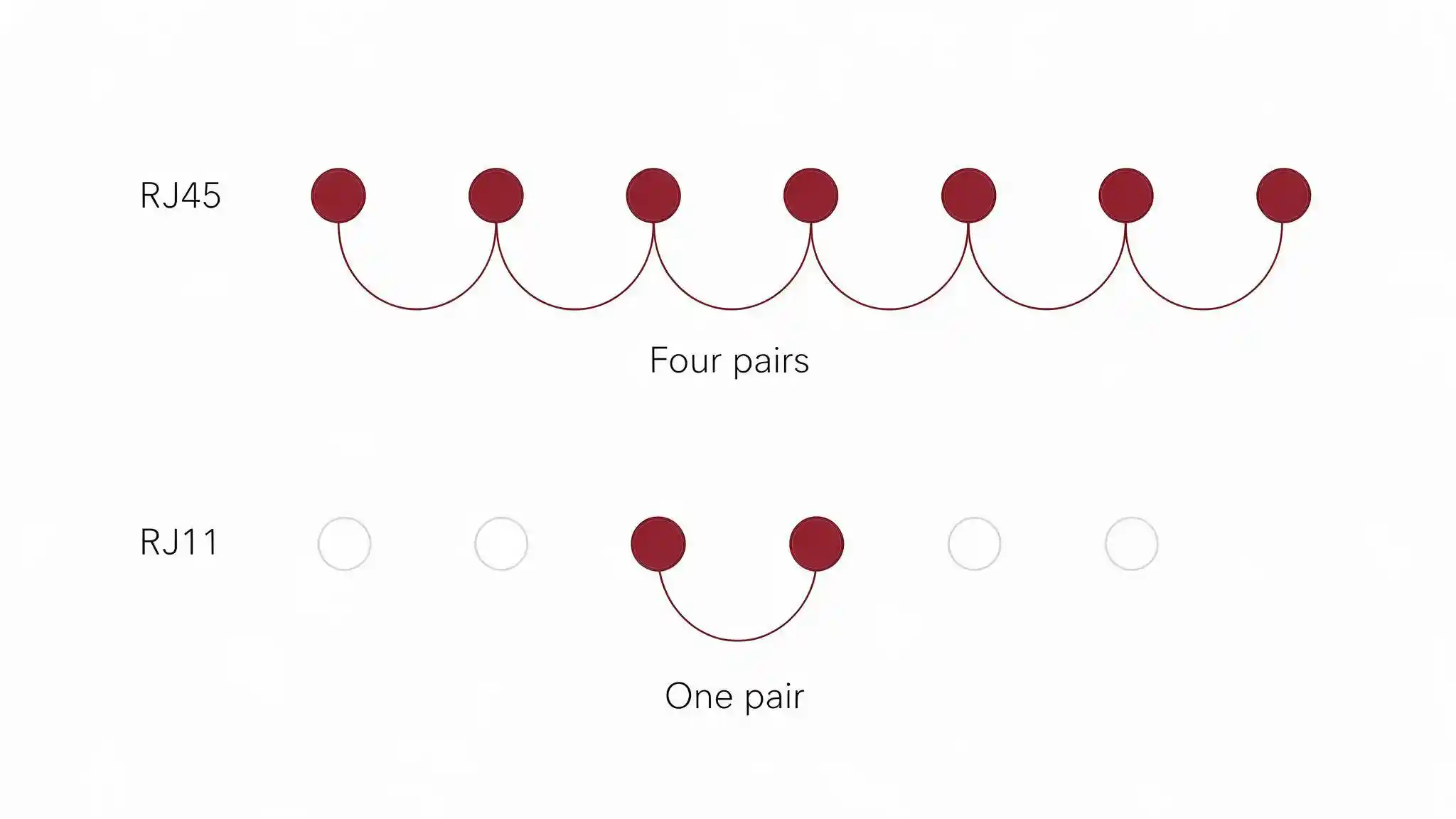
RJ45 is the connector on every Ethernet patch lead. It has eight positions and eight contacts — written 8P8C — carrying four twisted pairs for data.
RJ11 is the connector on an analogue telephone lead. It has six positions but only the centre two are populated with contacts — written 6P2C — carrying a single phone line.
Everything else follows from that. The RJ45 body is wider because it holds two more positions, and it carries four pairs because Ethernet needs them.
The pin count table
The registered jack codes describe how many contacts are loaded into a given shell, and which service they carry.
| Name | Positions / contacts | Pairs | Plug width | Used for |
|---|---|---|---|---|
| RJ11 | 6P2C | 1 | ~9.65 mm | Single analogue phone line |
| RJ14 | 6P4C | 2 | ~9.65 mm | Two phone lines |
| RJ25 | 6P6C | 3 | ~9.65 mm | Three phone lines |
| RJ45 | 8P8C | 4 | ~11.7 mm | Ethernet data |
One practical footnote: cords sold as RJ11 frequently use a 6P4C plug with two positions simply left unconnected. It still works for a single line, which is why the labelling is rarely questioned.
The 6-position family: RJ11, RJ14 and RJ25
This is the part that trips people up, and it is worth understanding if you work with voice cabling at all.
RJ11, RJ14 and RJ25 are the same physical connector. Identical shell, identical width, identical appearance. The only difference is how many of the six positions have contacts fitted — two, four or six — serving one, two or three telephone lines respectively.
Under the USOC convention, line one sits on the centre pair and additional lines nest outward around it — which is why plugging a single-line phone into a two-line jack usually just works.
In the field, almost every 6-position connector gets called “RJ11” regardless of contact count. That shorthand is harmless until someone needs the second or third line, at which point the distinction matters and the cable does not have the contacts to deliver it.
Why “RJ45” is technically the wrong name
The original RJ45 registration described a keyed 8-position connector with a specific pinout, used for modem applications. The connector on your Ethernet cable is not that. It is a generic 8P8C modular connector wired to T568A or T568B.
The RJ codes were service registrations under the Bell System scheme — they describe a wiring assignment, not a physical part. The industry borrowed “RJ45” as shorthand for the 8-position plug and the name stuck. Manufacturers, standards bodies and datasheets now all use it, so it is not worth fighting, but knowing the history explains why 8P8C appears on product datasheets where you might expect “RJ45”.
The mistake that damages jacks
This is the practical reason the RJ45 vs RJ11 distinction matters beyond trivia.
RJ45 into a phone jack
Physically impossible. The 8-position plug is too wide to enter a 6-position jack, so it simply will not seat. No harm done.
RJ11 into an Ethernet jack
It fits, and it clicks. The narrower plug sits centrally and can push against or deform the jack’s outermost contacts — the ones it never touches electrically.
The delayed failure
Bent outer contacts affect pairs used by Gigabit and 10 Gigabit Ethernet. The port may work at lower speeds and fail on a faster link later.
Nothing breaks immediately, the port passes a basic test, and the fault surfaces later when equipment is upgraded. Where voice and data outlets share a faceplate, clear labelling prevents it entirely.
From RJ11 to RJ45: analogue to IP telephony
In new commercial buildings the RJ45 vs RJ11 question increasingly answers itself, because voice has moved onto the data network.
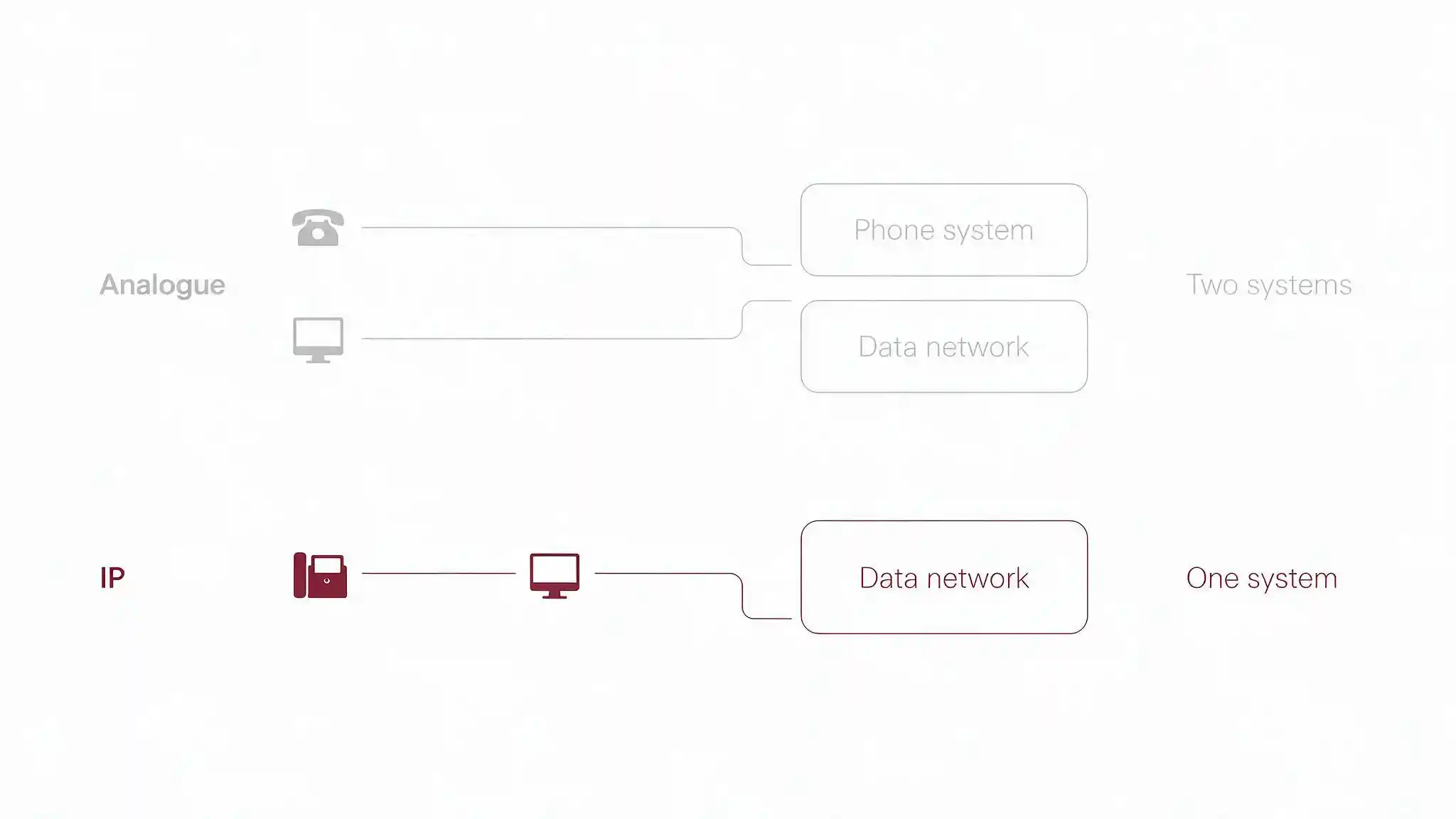
A traditional analogue phone connects over RJ11 to a dedicated voice cabling system, separate from the data network. An IP phone connects over RJ45 to the same structured cabling as everything else, usually drawing power over that connection and offering a second port so a computer can share the outlet. That consolidation is why most modern UAE fit-outs run one cabling system rather than two:
One cabling system, not two
Cat6 or Cat6A horizontal cabling serves phones, computers, access points and cameras alike. Our keystone jacks and patch panels terminate all of it identically.
Power over the same cable
IP phones typically draw power over Ethernet, removing the need for a separate power supply at every desk.
Legacy analogue still exists
Lifts, fire panels, gate intercoms and some alarm systems still use analogue lines. RJ11 has not disappeared from commercial buildings — it has just narrowed to specific services.
Label voice and data outlets clearly
Where both exist on one faceplate, labelling is what stops an RJ11 lead ending up in a data port.
Magnus supplies Snom IP phones alongside Premium-Line structured cabling, so the handset and the cabling behind it come from one source. Our unified communication solutions cover the wider migration from analogue lines to IP telephony.
For the wiring standards behind RJ45 termination, see our guide to the RJ45 colour code. For how plugs and jacks differ as components, see RJ45 versus keystone jack.
Frequently asked questions
Can I plug an RJ11 cable into an RJ45 port?
Physically yes, and it will click into place — but you should not. The narrower plug seats centrally in the wider jack and can push against or bend the outermost contacts. Those contacts carry pairs used by Gigabit and 10 Gigabit Ethernet, so the damage may only surface when the port is later used at higher speed.
Can I plug an RJ45 cable into a phone jack?
No. The 8-position RJ45 plug is roughly 11.7 mm wide against about 9.65 mm for a 6-position phone jack, so it simply will not fit. This direction fails harmlessly — the plug cannot enter far enough to damage anything.
How many pins does RJ11 have compared to RJ45?
RJ11 is a 6-position connector with two contacts fitted (6P2C), carrying one pair for a single telephone line. RJ45 is an 8-position connector with eight contacts (8P8C), carrying four pairs for Ethernet. Cords sold as RJ11 often use a 6P4C plug with two positions left unconnected.
Is a phone jack the same as an Ethernet jack?
No. A phone jack accepts a 6-position connector for analogue voice; an Ethernet jack accepts a wider 8-position connector for data. They look similar on a faceplate, which is why clear labelling matters where both are installed in the same room.
What is the difference between RJ11 and RJ14?
They use the same physical connector shell. RJ11 has two contacts fitted for one telephone line; RJ14 has four contacts for two lines. In practice almost every 6-position connector gets called RJ11 regardless of how many contacts it has, which only causes problems when a second line is actually needed.
Why is RJ45 called RJ45 if that is not its real name?
The original RJ45 registration described a keyed 8-position connector for modem use, not the Ethernet connector. The industry adopted the name as shorthand for the generic 8P8C modular plug and it became standard usage. Datasheets often say 8P8C, which is technically the more accurate description.
Do IP phones use RJ11 or RJ45?
RJ45. IP phones connect to the data network over standard Ethernet cabling, usually drawing power over that same connection and often providing a second RJ45 port so a computer can share the outlet. Analogue phones use RJ11; the connector difference reflects a difference in architecture.
Specifying voice and data outlets together
Most commercial fit-outs now run one structured cabling system for voice, data, wireless and surveillance. Getting the outlet schedule and labelling right at design stage is what prevents the wrong lead in the wrong port later.
Magnus supplies Premium-Line keystone jacks, patch panels and structured cabling alongside Snom IP telephony across our networking and wireless solutions range. Send us your outlet schedule and our pre-sales team will specify the terminations to match.
Get a quoteSource
Registered Jack designations originate in the Bell System Universal Service Ordering Code scheme and are defined under FCC 47 CFR Part 68, now administered by ACTA. Ethernet pin and pair assignments for 8P8C connectors follow ANSI/TIA-568 (T568A and T568B). Connector dimensions are nominal industry figures and vary slightly between manufacturers — confirm against the specific product datasheet where tolerance matters. The characterisation of “RJ45” as a misnomer for the 8P8C modular connector is well documented in cabling industry technical literature. Cross-checked against independent structured-cabling and connector references.