


May 11 2026
/
Cat6, Cat7, and Cat8 Cable Buying Guide
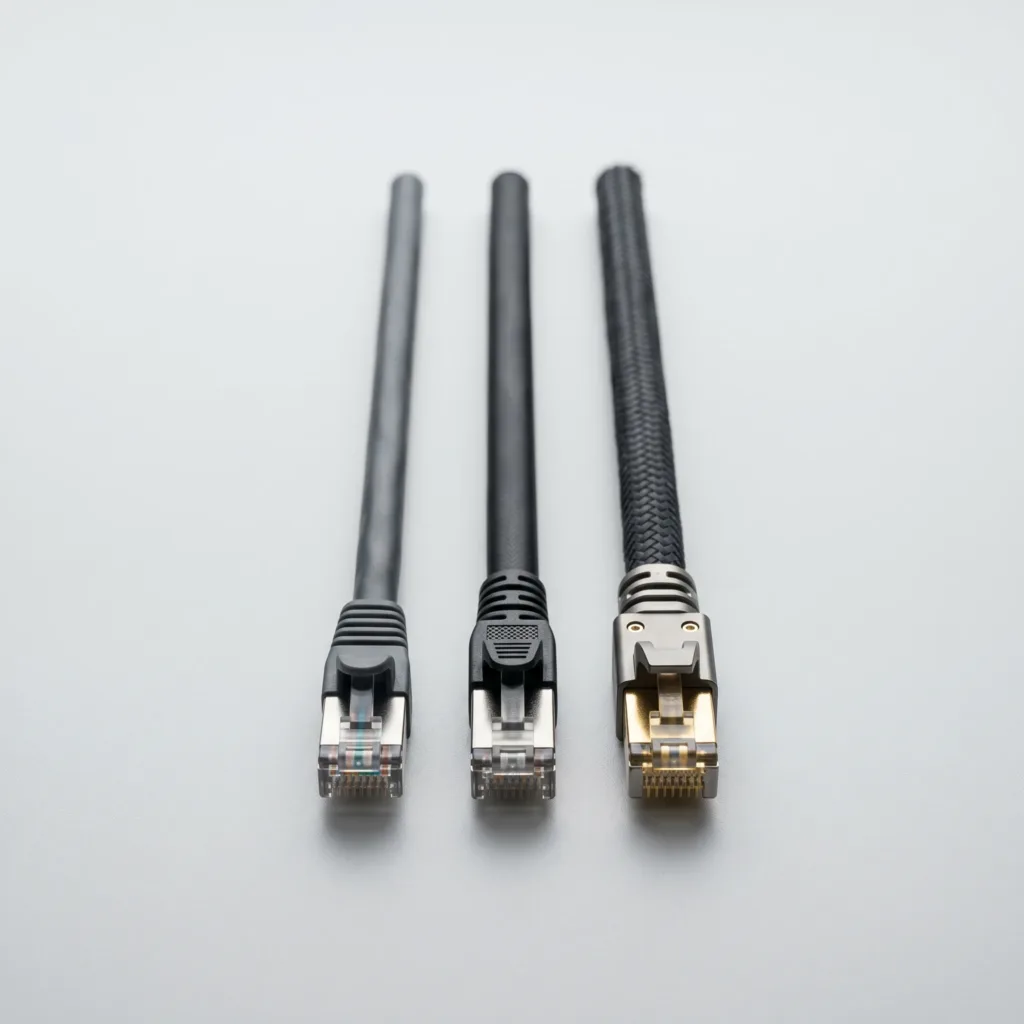
Selecting the right ethernet cable depends on your bandwidth, distance, and environmental requirements. Cat6 offers up to 10 Gbps for shorter distances, Cat7 provides 10 Gbps with extensive shielding for industrial use, and Cat8 delivers an impressive 40 Gbps for advanced data centers.
Key Highlights
- Bandwidth Capabilities: Cat6a, Cat7, and Cat8 cables offer escalating frequencies, ranging from 500 MHz to 2000 MHz, ensuring optimal data transmission rates.
- Shielding Technologies: Advanced shielding in Cat7 and Cat8 minimizes crosstalk and electromagnetic interference, which is critical for high-density enterprise environments.
- Future-Proofing Infrastructure: Investing in higher-category cables supports emerging technologies, including smart building systems and high-power Power over Ethernet (PoE) applications.
Overview of Network Cabling
Building a reliable network infrastructure requires a thorough understanding of the components that facilitate data transfer. As organizations scale their operations and adopt bandwidth-intensive applications, the physical cabling connecting servers, switches, and endpoints becomes increasingly vital. The choice between Cat6, Cat7, and Cat8 cables dictates the efficiency, speed, and reliability of your entire network.
Technology evolves constantly, demanding higher data transfer rates and lower latency. Selecting the appropriate category of twisted-pair copper cabling ensures your organization can handle current network traffic while accommodating future expansion. This guide outlines the specifications, advantages, and ideal applications for each cable category to assist IT professionals and system integrators in making informed infrastructure decisions.
Cabling Categories
To make the best decision for your network, it is essential to understand the distinct characteristics of each cable type.
- Cat6 and Cat6a: Category 6 (Cat6) supports 1 Gbps up to 100 meters and 10 Gbps up to 55 meters, operating at 250 MHz. Category 6a (Augmented) extends the 10 Gbps capability to the full 100 meters by operating at 500 MHz, making it the current standard for most commercial building installations.
- Cat7: Operating at 600 MHz, Cat7 cables support 10 Gbps over 100 meters. They require fully shielded twisted pairs (S/FTP), offering superior protection against alien crosstalk and electromagnetic interference. This makes them highly suitable for industrial environments or areas with heavy electrical equipment.
- Cat8: Designed specifically for data centers, Cat8 cables operate at up to 2000 MHz. They can transmit data at speeds of 25 Gbps or 40 Gbps over short distances (up to 30 meters). They represent the pinnacle of copper cabling performance, providing a cost-effective alternative to fiber optics for switch-to-server connections.
Technical Comparison
Specification | Cat6a | Cat7 | Cat8 |
|---|---|---|---|
Maximum Data Rate | 10 Gbps | 10 Gbps | 25 Gbps / 40 Gbps |
Maximum Bandwidth | 500 MHz | 600 MHz | 2000 MHz |
Maximum Distance | 100 meters | 100 meters | 30 meters |
Shielding Type | UTP or STP | S/FTP required | S/FTP required |
Primary Connector | RJ45 | GG45 / TERA / RJ45 | RJ45 |
Selecting and Installing Your Cables
Upgrading or installing new network cabling requires a systematic approach to ensure optimal performance and return on investment.
- Assess Current and Future Network Requirements: Evaluate the volume of data your organization processes daily. Consider future deployments of technologies like Wi-Fi 6/7, high-definition IP surveillance, or enterprise resource planning systems that will increase bandwidth demands.
- Determine Physical Distance Constraints: Measure the cable runs from your server rooms or telecom closets to the endpoints. Remember that Cat8 is restricted to 30 meters, limiting its use to localized data center racks, whereas Cat6a and Cat7 can span 100 meters.
- Evaluate Environmental Interference: Identify potential sources of electromagnetic interference (EMI) along the cable routing paths. Factory floors or facilities with heavy machinery necessitate the robust shielding provided by Cat7 or Cat8 cables.
- Engage Certified Installers: High-performance cables require precise installation techniques. Bending cables beyond their specified radius or improperly terminating connections can degrade signal quality. Partner with certified system integrators to ensure flawless deployment.
Common Use Cases and Applications
Different cabling categories serve distinct operational environments. Aligning the cable type with your specific application ensures maximum efficiency.
- Commercial Office Networks: Cat6a is the standard for modern office buildings. It provides ample bandwidth for workstations, Voice over IP (VoIP) phones, and standard PoE devices like wireless access points.
- Industrial and Manufacturing Facilities: Cat7 excels in environments with high electromagnetic interference. Its rigorous shielding protects data integrity across factory floors, ensuring continuous communication between automated machinery and control systems.
- Enterprise Data Centers: Cat8 is engineered for switch-to-server connections in top-of-rack or end-of-row data center configurations. It supports the massive data throughput required by modern servers without the higher costs associated with fiber optic transceivers.
Strategic Benefits of Upgrading
Investing in the appropriate network cabling yields significant long-term advantages for your organization.
- Enhanced Network Reliability: High-quality shielded cables drastically reduce packet loss and network downtime, ensuring your workforce maintains uninterrupted access to critical business applications.
- Superior PoE Performance: Modern devices demand more power. Advanced cables, particularly Cat6a and above, have thicker copper conductors that dissipate heat better, allowing them to support high-power PoE++ devices safely.
- Long-Term Cost Efficiency: While higher-category cables involve a larger initial investment, they prevent the need for premature network overhauls. Installing robust infrastructure now saves substantial labor and material costs over the next decade.
Implementation Challenges and Limitations
Despite the clear benefits, organizations must navigate certain challenges when deploying advanced copper cabling.
- Increased Cable Thickness and Weight: Cat7 and Cat8 cables incorporate heavy shielding, making them significantly thicker and less flexible than older cables. This requires careful planning for conduit space and cable management trays.
- Strict Installation Requirements: Terminating shielded cables requires specialized connectors and meticulous grounding. Failure to properly ground a shielded system can cause the shield to act as an antenna, drawing in the exact interference it was designed to block.
- Higher Component Costs: Upgrading the cabling often means upgrading switches, patch panels, and endpoints to realize the full bandwidth potential, leading to higher overall project expenditures.
Industry Trends and Future Scope
The technology landscape continuously pushes the boundaries of network infrastructure. Several trends are shaping the future of enterprise cabling.
- The Rise of Smart Buildings: The integration of IoT sensors, advanced security systems, and automated lighting relies heavily on stable, high-bandwidth PoE connections, cementing the necessity of Cat6a and above in new construction projects.
- Migration to 40G Ethernet: As data generation grows exponentially, more data centers are adopting 40GBASE-T standards, driving the demand for reliable Cat8 copper solutions as a complement to fiber optic backbones.
Visualizing Cable Performance
[Diagram Representation: A bar chart illustrating the maximum data transfer rates of the three cable categories. The horizontal axis represents the cable type (Cat6a, Cat7, Cat8), while the vertical axis represents speed in Gigabits per second (Gbps). The Cat6a and Cat7 bars reach 10 Gbps, while the Cat8 bar spikes dramatically to 40 Gbps, visually emphasizing its superiority for high-speed data center applications.]
Why Choose Magnus Infotech as Your Distribution Partner
Securing high-quality cabling infrastructure requires a reliable distribution partner. Magnus Infotech is dedicated to delivering seamless technology solutions tailored to your operational needs.
- Extensive Regional Reach: As a premier B2B IT distribution company based in Dubai, UAE, we act as the vital bridge between global technology vendors and regional resellers across the Middle East.
- Unparalleled Expertise: Headquartered at Al Tawhidi Building, Al Mankhool Street, our team offers specialized knowledge in Networking & Wireless domains to ensure you receive the exact solutions required for your projects.
- Commitment to Excellence: Our channel partners are at the center of everything we do. We foster mutually beneficial relationships to ensure your business receives the cutting-edge technology solutions it deserves.
Partner with Magnus Gulf today to secure reliable, enterprise-grade networking infrastructure. Contact our Dubai headquarters to discuss your specific B2B IT requirements.
Frequently Asked Questions
Can I use Cat8 cable for my standard office network?
While you can technically use Cat8 cable in a standard office, it is generally not recommended due to its 30-meter length limitation and higher cost. Cat6a is typically the most efficient and practical choice for commercial office environments.
Do I need special connectors for Cat7 cables?
Cat7 cables can use standard RJ45 connectors, but to achieve maximum performance and shielding benefits, specialized connectors like GG45 or TERA are often utilized. Proper termination is critical for maintaining the cable’s integrity.
Will upgrading my cable automatically increase my internet speed?
Upgrading your cable will only improve speeds if your previous cabling was the bottleneck. Your actual internet speed is still dictated by your Internet Service Provider (ISP) and the capabilities of your network switches and routers.
What is the main difference between UTP and S/FTP shielding?
UTP (Unshielded Twisted Pair) offers no additional metallic shielding and relies on the twisting of wires to cancel interference. S/FTP (Shielded/Foiled Twisted Pair) features a foil shield around each individual pair and an outer braided shield, offering maximum protection against interference.
How does Power over Ethernet (PoE) affect my cable choice?
PoE transmits electrical power alongside data. Higher category cables, such as Cat6a and above, utilize thicker copper conductors that better manage the heat generated by high-power PoE applications, making them safer and more efficient for modern smart devices.