


Security & Surveillance · UAE Compliance
SIRA Approved CCTV Cameras: 12 Critical Specs for 2027
SIRA approved CCTV cameras meet twelve specifications set out in Dubai’s Preventive Systems Manual — 1080p Full HD or higher, a signal-to-noise ratio of at least 48 dB, IP66 for outdoor use, and Wide Dynamic Range of at least 110 dB where the camera faces a light source. This checklist covers every requirement, the datasheet field that proves it, and how to verify each one before you order.
Key takeaways
- Twelve camera requirements are set in the Manual. A camera that misses any one of them is non-compliant regardless of how good it is otherwise.
- “WDR supported” on a datasheet is not evidence of compliance. The Manual specifies at least 110 dB. If no decibel figure is published, the claim is unverified.
- Fixed-lens cameras fail above 4 metres. Remote zoom and focus are mandatory at that height, which means motorised varifocal.
- Auto iris is required wherever daylight changes through the day — that rules out fixed-iris cameras at most entrances and perimeters.
- Resolution alone never determines compliance. The camera must satisfy the view class assigned to its area, which depends on lens, distance and mounting angle.
How to identify SIRA approved CCTV cameras
This is worth settling first, because the phrase “SIRA-approved camera” is used loosely across the market and it causes real procurement mistakes.
SIRA approved CCTV cameras are defined by specification, not by brand approval. The Preventive Systems Manual sets twelve minimum requirements that any digital camera must meet. Where the Manual does require a component to be specifically approved by SIRA — and it does for certain systems, including vehicle plate registration systems and the monitoring service that surveillance systems connect to — it states that explicitly in the relevant clause.
The practical consequence: a camera is suitable because its published specification meets the Manual, not because a supplier describes it as approved. Ask for the datasheet, not the label.
Where a component does require approval, confirm it at model level with SIRA before ordering. Approval status is not something a distributor can assert on a manufacturer's behalf, and Magnus does not describe any product as approved without that confirmation.
The specification checklist
These twelve requirements are what actually define SIRA approved CCTV cameras. Check each against the manufacturer datasheet before raising a purchase order.
| # | Requirement | SIRA minimum | Datasheet field to check |
|---|---|---|---|
| 01 | Colour | Colour camera | Image sensor / colour |
| 02 | Resolution | 1080p Full HD or higher | Max resolution |
| 03 | Bit rate | Variable bit rate; fixed not accepted | Video compression / bitrate control |
| 04 | Software compatibility | Works with standard VMS | ONVIF profile, integration list |
| 05 | Signal-to-noise ratio | At least 48 dB | SNR |
| 06 | Visibility | Visible, not concealed | Form factor |
| 07 | Duty cycle | Continuous operation | Operating conditions |
| 08 | Outdoor protection | IP66 minimum, camera or enclosure | Ingress protection |
| 09 | Wide Dynamic Range | At least 110 dB facing a light source | WDR, stated in dB |
| 10 | Auto iris | Required where light varies by time of day | Lens / iris type |
| 11 | Infrared | IR with automatic switch to monochrome | Day/night, IR cut filter |
| 12 | Cameras above 4 m | Remote zoom and focus | Motorised varifocal lens |
Two further requirements sit on the recorder side but constrain camera choice, because the camera has to interoperate: the system must be ONVIF 2.0 compatible and must support RTSP for live streaming.
How to verify each item on a datasheet
Most of the checklist can be confirmed in a few minutes if you know which field to read.
Sensor block
Confirms resolution, colour and signal-to-noise ratio. SNR is the one most often missing — if it isn't published, request it from the manufacturer rather than assuming it passes.
Lens block
Confirms iris type and whether the lens is motorised. Look for P-iris or DC-iris for the auto iris requirement, and motorised varifocal for anything mounted above 4 metres.
Video block
Confirms bitrate control and streaming. You need variable bit rate available, plus RTSP and an ONVIF profile for interoperability with the recorder.
Environmental block
Confirms ingress protection and impact rating. The Manual accepts IP66 on the camera or on its enclosure, so a rated housing is a legitimate route for an indoor-rated camera used outdoors.
Datasheet traps that fail inspection
These are the specification errors that survive procurement and surface at inspection, when they are expensive to fix.
“WDR” with no decibel figure
The Manual specifies at least 110 dB. A datasheet that says only “WDR supported” or “120 dB DWDR” is not the same thing — digital or software WDR is a processing technique, not the sensor-level dynamic range the figure refers to. Require a published dB value for true WDR.
Fixed-iris cameras at entrances
Auto iris is required wherever lighting varies through the day. A glazed entrance in Dubai swings enormously between midday and evening. Fixed-iris cameras are cheaper and frequently specified here by mistake.
Fixed-lens cameras above 4 metres
Remote zoom and focus are mandatory at that height. A fixed-lens camera cannot satisfy it, and re-aiming means getting a lift back on site after handover.
Constant bit rate left enabled
Fixed bit rate is not accepted. CBR is often set during commissioning to make storage planning predictable. It has to be switched to variable, with no maximum transfer speed configured.
“ONVIF supported” versus conformant
The Manual requires ONVIF 2.0 compatibility. Partial or vendor-specific implementations can behave unpredictably with third-party recorders. Check the product appears on the ONVIF conformant product list rather than relying on a marketing line.
Missing SNR
At least 48 dB is required, and signal-to-noise ratio is routinely absent from consumer-grade datasheets. Absence is not compliance. If the manufacturer cannot supply it, treat the model as unverified.
Matching the camera to the required view class
This is the step that most specification errors come back to. Resolution is a floor, not a target. What determines whether a camera passes is the view class assigned to the area it covers — Identification, Recognition, Observation, Detection or Monitoring — and whether the camera achieves it from its actual mounting position.
The Manual's primary test is the size of a standard target, a person 1.6 metres tall, as a percentage of the display. It also gives pixel densities that apply in exceptional cases with prior SIRA approval. Those densities are useful at planning stage because they convert directly into a maximum scene width.
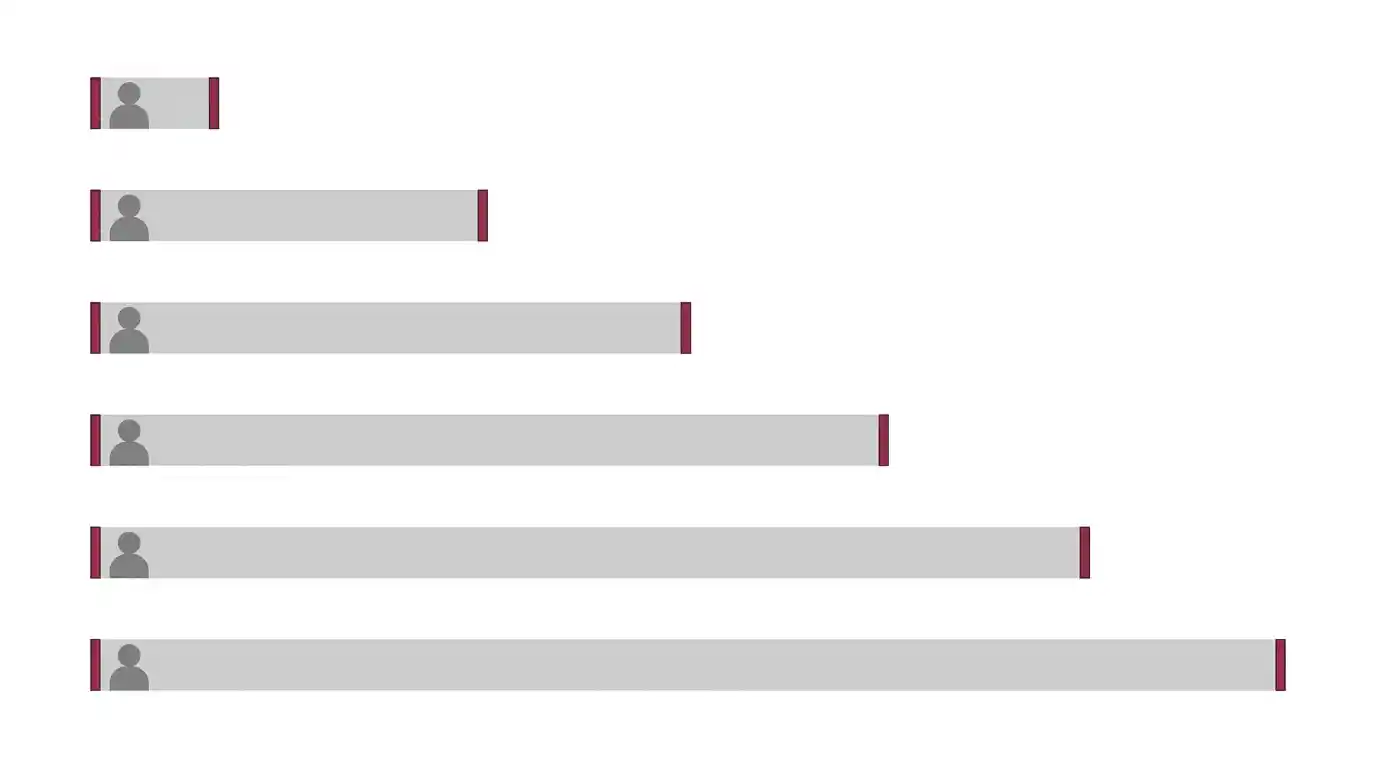
| View class | Pixel density | Max scene width at 1080p | Max scene width at 4K |
|---|---|---|---|
| Inspection | 1000 px/m | 1.9 m | 3.8 m |
| Identification | 300 px/m | 6.4 m | 12.8 m |
| Recognition | 125 px/m | 15.4 m | 30.7 m |
| Observation | 62.5 px/m | 30.7 m | 61.4 m |
| Detection | 30 px/m | 64.0 m | 128.0 m |
| Monitoring | 12.5 px/m | 153.6 m | 307.2 m |
How these figures are derived. Scene width is horizontal pixel count divided by required pixel density — 1920 px at 300 px/m gives 6.4 metres. The pixel densities are the Manual's own figures for exceptional cases; the scene widths are arithmetic, provided as a planning aid. They do not replace the Manual's primary target-size test, and they assume the camera is within the mounting angle limits for that class.
The practical reading: a single 1080p camera cannot deliver Identification across a 12-metre lobby. Either the class is achieved with a tighter lens over a narrower field, or a higher-resolution camera is specified, or the area needs more than one camera. Deciding this on the drawing is far cheaper than discovering it at handover.
Our guide to SIRA CCTV requirements sets out which class applies to which area, and the mounting angle limits that go with each.
Mounting and physical requirements
Several requirements are decided by where the camera goes rather than what it is.
- Below 2.5 metres and within reach: equipment must have anti-tamper and vandal-resistant features rated at least IK10.
- Above 4 metres: remote zoom and focus are mandatory.
- Outdoors: IP66 minimum, on the camera or its enclosure.
- Visibility: cameras must be clearly visible. Concealed cameras require prior SIRA approval.
- Roof-mounted: cameras may not cover areas beyond the establishment's boundaries without approval.
- Obstruction: an image is unacceptable if obstruction exceeds 5% of the total image area, and the centre must be clear.
Cameras also draw power and data over the structured cabling, which carries its own requirements — CAT 6 copper minimum, with copper-clad aluminium explicitly prohibited. Magnus supplies Premium-Line solid copper cabling and D-Link PoE switching for exactly this.
Questions to ask before you order
Send these to the supplier with the model number. If any answer is missing, the model is unverified rather than compliant.
What is the published signal-to-noise ratio?
Needs to be at least 48 dB, from the datasheet rather than a sales estimate.
What is the true WDR figure in decibels?
At least 110 dB where the camera faces a light source. Confirm whether the figure refers to true or digital WDR.
Is the lens motorised, and what iris type is fitted?
Determines whether the model can be used above 4 metres and in variable lighting.
Is the model on the ONVIF conformant product list?
Ask for the conformance record, not a compatibility claim.
What ingress and impact ratings apply — camera or housing?
IP66 either way is acceptable; IK10 matters below 2.5 metres.
What scene width does this lens give at my mounting distance?
The answer decides whether the required view class is achievable from that position.
Frequently asked questions
Does SIRA publish a list of approved CCTV cameras?
SIRA approved CCTV cameras are defined by the Preventive Systems Manual’s specifications, not by a published brand list. Where the Manual does require a specifically SIRA-approved component, it says so in that clause. Confirm approval status directly with SIRA at model level, and treat supplier claims of approval as unverified until you have.
What WDR rating does SIRA require?
At least 110 dB for any camera facing a natural or artificial light source, including light reflected from polished surfaces. The Manual also requires WDR on cameras used for identification regardless of position. A datasheet that claims WDR without publishing a decibel figure does not demonstrate compliance.
Is a 2MP camera enough?
2MP is 1080p, which meets the minimum resolution. Whether it is sufficient depends on the view class required for that area and the scene width the camera has to cover. At Identification, a 1080p camera covers roughly 6.4 metres. Beyond that, you need a tighter lens, a higher-resolution camera, or more cameras.
Can I use a fixed-lens camera?
Only below 4 metres. The Manual requires remote zoom and focus for cameras installed at 4 metres or higher, which in practice means a motorised varifocal lens. Fixed-lens models at height are one of the more common and expensive specification errors.
Does the camera or the housing need the IP66 rating?
Either. The Manual requires outdoor cameras or their enclosures to be rated at least IP66, so an appropriately rated housing is a legitimate way to deploy an indoor-rated camera outdoors. The rating still has to be documented for the specific enclosure used.
Do cameras have to be ONVIF conformant?
The Manual requires ONVIF 2.0 compatibility and RTSP support. Because these are named explicitly, partial or proprietary implementations create risk at inspection. Checking the model against the ONVIF conformant product list is more reliable than a datasheet compatibility claim.
Can cameras be hidden or covert?
No. Cameras must be clearly visible and not concealed. Covert installations require prior approval from SIRA. Roof-mounted cameras also may not cover areas outside the establishment's boundaries without approval.
Does a higher-resolution camera remove the need for the other specifications?
No. The twelve requirements apply independently. A 4K camera with fixed iris, no published SNR, or WDR below 110 dB where it faces a light source still fails. Resolution helps you satisfy a view class over a wider scene, but it does not substitute for any other requirement.
Specifying cameras against a schedule
Compliance is decided model by model, area by area. The efficient way through it is to fix the view class for each area first, then select cameras that satisfy the class from their actual mounting position, then check each candidate against the twelve requirements above.
Magnus distributes IP surveillance from VIVOTEK and HOLOWITS across our IP surveillance solutions range, with storage sized to match. Send your area list and mounting heights and our pre-sales team will confirm which models qualify as SIRA approved CCTV cameras for your project.
Get a quoteSource
All specifications are taken from Administrative Resolution No. (13) of 2025 Approving the Preventive Systems Manual, Security Industry Regulatory Agency, Government of Dubai, issued 14 April 2025. Scene-width figures are arithmetic derived from the Manual's pixel densities and are labelled in the text. SIRA publishes amendments on its website; verify against the current Manual before finalising any specification. Where the English translation conflicts with the Arabic text, the Arabic prevails.
This guide is provided for general information and is not legal advice.