


Apr 22 2026
/
What Is a Next-Generation Firewall (NGFW)?
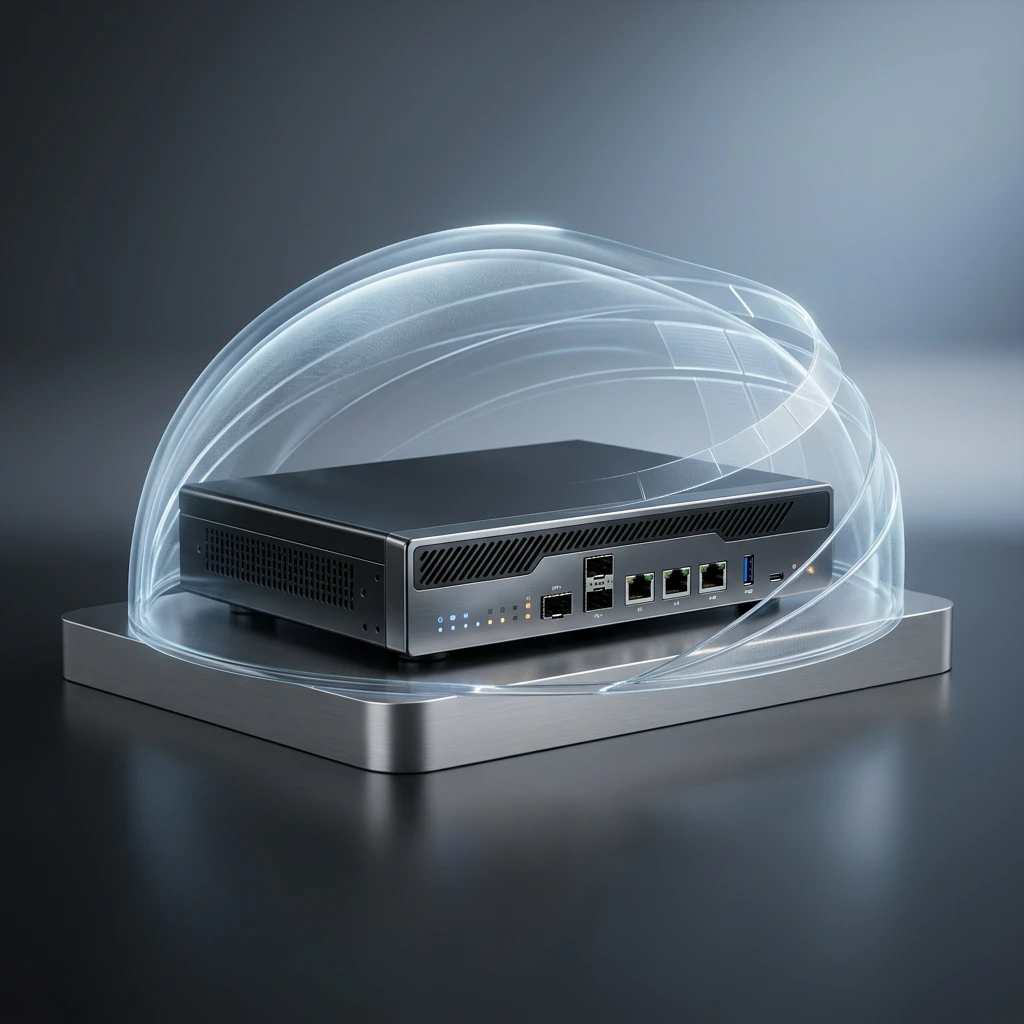
A next-generation firewall (NGFW) is an advanced security appliance that inspects network traffic at the application level. Unlike traditional firewalls that only filter traffic based on ports and IP addresses, an NGFW integrates intrusion prevention, application awareness, and deep packet inspection to block sophisticated cyber threats effectively.
Key Highlights of Next-Generation Firewalls
- Deep Packet Inspection (DPI): NGFWs examine the data payload within network packets to detect malware and anomalous behavior, going far beyond standard port-blocking.
- Application Awareness and Control: These systems identify exactly which applications are running on a network and enforce specific security policies for each application, preventing unauthorized software execution.
- Integrated Intrusion Prevention Systems (IPS): A robust NGFW automatically detects and blocks known vulnerabilities and active attacks before they can compromise sensitive enterprise data.
An Introduction to Modern Network Security
Network perimeters are continuously expanding. Organizations rely on complex infrastructures that connect remote workers, cloud applications, and internet-of-things (IoT) devices. Consequently, basic security protocols are no longer sufficient to protect valuable corporate assets from highly coordinated cyber attacks.
A traditional firewall operates primarily at the network and transport layers, using basic stateful inspection to approve or deny traffic. An NGFW, conversely, provides a comprehensive, multi-layered approach to network security. By bringing advanced capabilities like application control, active threat intelligence, and user identity management into a single platform, these sophisticated firewalls secure the modern enterprise against dynamic and stealthy threats. Understanding the transition from traditional security measures to next-generation frameworks is a critical requirement for businesses aiming to maintain reliable operations and secure their digital environments. Learn more about cybersecurity solutions in UAE available through Magnus.
Types of Next-Generation Firewalls
Next-generation firewalls come in several distinct forms to meet the specific deployment needs of different organizations.
- Hardware-Based NGFWs: These are physical appliances deployed at the perimeter of an on-premises data center. They offer dedicated processing power and high throughput, making them ideal for large enterprises with substantial internal network traffic. Explore hardware-based NGFW appliances from SonicWall and Cisco distributed by Magnus.
- Virtual (Software-Based) NGFWs: Designed for virtualized environments, these firewalls operate as virtual machines (VMs) within private or public clouds. They provide the same advanced security features as hardware models but offer greater flexibility and scalability for software-defined networks. Complement virtual NGFWs with scalable server and storage solutions from Magnus to support your virtualized security infrastructure.
- Cloud-Native NGFWs (Firewall-as-a-Service): Delivered directly from the cloud, this model provides unified security for distributed workforces and branch offices without the need to deploy physical hardware at every location. Discover how Magnus’s networking and wireless solutions support the connectivity requirements of cloud-native NGFW deployments.
Comparing NGFW vs. Traditional Firewalls
| Factor | Traditional Firewall | Next-Generation Firewall (NGFW) |
|---|---|---|
| Inspection Depth | Port, protocol, and IP address only | Deep packet inspection, application-level analysis |
| Threat Prevention | Lacks built-in intrusion prevention | Integrated Intrusion Prevention System (IPS) |
| Application Control | Cannot distinguish between different applications on the same port | Identifies and controls specific applications regardless of port |
| User Identity | Relies entirely on IP addresses for policies | Integrates with directory services (e.g., Active Directory) for user-based policies |
| Update Mechanism | Manual or infrequent signature updates | Dynamic, cloud-based threat intelligence feeds updated in real-time |
Explore NGFW products from SonicWall and Cisco available through Magnus to make the upgrade from traditional to next-generation security.
How Next-Generation Firewalls Work
Implementing an NGFW involves a sophisticated process of traffic analysis and threat mitigation.
- Initial Packet Capture and Stateful Inspection: The firewall intercepts incoming and outgoing network traffic. It performs a baseline check to ensure the packet matches an established, legitimate connection.
- Deep Packet Inspection (DPI): The system unpacks the packet to examine its actual contents. It looks for hidden malware, unauthorized commands, and malicious payloads that traditional firewalls would ignore. Request support from the Magnus team for expert DPI configuration guidance.
- Application Identification: The NGFW analyzes the traffic signature to determine the exact application generating the data. It applies specific security rules based on the application’s required permissions. Ensure your application traffic is fully supported by a high-performance networking infrastructure from Magnus.
- User Authentication: The firewall cross-references the traffic source with enterprise directory services to verify the user’s identity and ensure they have the appropriate access rights. Pair your NGFW with unified communication solutions from Magnus to maintain secure, identity-verified communications across your organization.
- Threat Prevention and Action: Using integrated IPS and real-time threat intelligence, the firewall determines if the traffic is safe. Malicious traffic is instantly dropped, while legitimate data is allowed to pass securely to its destination. Explore industry-leading threat prevention from SonicWall and Cisco distributed by Magnus.
Use Cases for NGFW
Organizations across various sectors depend on NGFWs to secure their operations.
Securing Distributed Enterprises
Large corporations use NGFWs to enforce consistent security policies across their headquarters, remote branch offices, and cloud environments. The centralized management capabilities allow IT teams to maintain strict security standards globally. Support your distributed network with enterprise-grade networking and wireless solutions from Magnus and complement NGFW coverage with physical security surveillance solutions across all locations. View Magnus’s global locations to see how we support enterprises across the Middle East.
Protecting Healthcare Data
Medical institutions deploy NGFWs to safeguard sensitive patient records and ensure compliance with stringent regulatory frameworks. The advanced threat prevention capabilities stop ransomware attacks from paralyzing critical medical systems. Strengthen healthcare data protection with server and storage solutions from Magnus for resilient backup infrastructure, and secure physical access with security surveillance solutions from Vivotek and Holowits.
Defending Financial Institutions
Banks and financial services rely on the deep packet inspection and encrypted traffic analysis of NGFWs to block data exfiltration and protect high-value financial transactions. Complement NGFW protection with cybersecurity solutions in UAE from Magnus and enhance physical branch security with SIRA-approved CCTV solutions.
Key Benefits of Next-Generation Firewalls
Adopting an NGFW provides organizations with significant operational and security advantages.
- Comprehensive Threat Protection: By unifying firewall capabilities, IPS, and anti-malware into a single system, organizations benefit from a highly resilient defense posture against known and zero-day threats. Explore complementary cybersecurity solutions from Magnus for a fully layered defense architecture.
- Granular Network Visibility: IT administrators gain precise insights into who is using the network, what applications are running, and where potential vulnerabilities exist. This visibility is vital for proactive security management. Pair network visibility with physical surveillance from Holowits and Vivotek for end-to-end operational awareness.
- Simplified Security Infrastructure: Consolidating multiple security appliances into one integrated platform reduces network complexity, decreases hardware costs, and streamlines ongoing maintenance. Learn why Magnus is the right distribution partner to help simplify and consolidate your security procurement.
Challenges and Limitations
Despite their advanced capabilities, NGFWs present certain challenges that organizations must carefully manage.
- Complex Implementation: Configuring application rules, user policies, and IPS signatures requires specialized expertise. Improper configuration can lead to network downtime or undetected security gaps. Magnus’s technical support team and request support portal are available to guide your team through NGFW deployment and configuration.
- Performance Overhead: Performing deep packet inspection and decryption on heavy traffic loads requires significant processing power. Organizations must carefully size their hardware to avoid network latency. Ensure your underlying infrastructure is performance-ready with server and storage solutions and high-throughput networking hardware from Magnus.
- Higher Initial Investment: The cost of acquiring and licensing a robust NGFW is generally higher than traditional firewalls, requiring a clear demonstration of value for executive stakeholders. Magnus’s partner program and credit application portal can assist in managing procurement costs effectively.
Trends and Future Scope of Network Security
The landscape of cybersecurity is constantly shifting, driving continuous innovation in firewall technology.
- Artificial Intelligence and Machine Learning: NGFW vendors are increasingly integrating AI algorithms to predict and neutralize previously unseen threats autonomously. Machine learning models analyze traffic patterns to detect subtle deviations that indicate a cyber attack. Discover AI-powered security surveillance solutions from Holowits as a leading example of AI-driven security intelligence available through Magnus.
- Zero Trust Architecture Integration: NGFWs are becoming foundational elements of the Zero Trust security model. They operate on the principle of “never trust, always verify,” continuously authenticating users and devices regardless of their location on the network. Build a comprehensive Zero Trust framework with cybersecurity solutions from Magnus, including Cisco and SonicWall products.
- Secure Access Service Edge (SASE): As organizations move to the cloud, NGFW capabilities are merging with wide-area networking (WAN) to create cloud-delivered security architectures that protect users globally. Explore Magnus’s networking and wireless solutions portfolio to find SASE-ready infrastructure components.
Visualizing Firewall Architecture
When designing a secure network, system integrators typically map out a structured diagram. At the edge of the network, the internet connects to the NGFW appliance — available from SonicWall and Cisco through Magnus. The NGFW then branches out into three distinct zones:
- The Demilitarized Zone (DMZ), housing public-facing web and email servers.
- The Internal Corporate Network, containing sensitive databases and employee workstations protected by server and storage solutions from Magnus.
- The Management Interface, allowing authorized IT personnel to configure threat intelligence feeds and monitor application visibility dashboards.
This visual separation ensures that even if public-facing servers are compromised, the internal network remains firmly protected behind the NGFW’s advanced inspection engines. Access architecture diagrams and configuration reference guides via the Magnus partner resources portal.
Why Choose Magnus Infotech as Your IT Partner
Navigating the complexities of modern network security requires a trusted and dedicated partner. Magnus is an authorized distributor of the world’s leading technology products, serving as a reliable bridge between global tech vendors and regional resellers across the Middle East.
- Unwavering Commitment to Excellence: Operating from the Al Tawhidi Building on Al Mankhool Street in Dubai, UAE, our team is deeply committed to providing you with cutting-edge products and solutions in Networking, Security Surveillance, and Unified Communication. Learn more about Magnus.
- Trusted Channel Ecosystem: Our partners are at the center of everything we do. We foster mutually beneficial relationships with system integrators to ensure your business receives the robust, next-generation security solutions it deserves. Become a partner or explore our partner program.
- Seamless Technology Solutions: We specialize in delivering unparalleled solutions marked by a seamless blend of quality and value. Our extensive market expertise solidifies our position as the premier Value Added Distributor in the region. Explore our full brands portfolio including Cisco, SonicWall, and HPE Aruba.
Connect with Magnus Gulf today to secure your infrastructure with industry-leading next-generation firewall solutions.
Frequently Asked Questions
What makes an NGFW different from a traditional firewall?
A traditional firewall limits access based on ports and IP addresses. An NGFW inspects the data payload, identifies specific applications, and integrates intrusion prevention systems to block advanced threats.
Does an NGFW replace the need for antivirus software?
While an NGFW provides robust network-level protection against malware and viruses, endpoint protection (antivirus software on individual devices) remains necessary to secure devices that may connect to the network from outside the protected perimeter.
How does application control benefit an organization?
Application control allows administrators to see exactly which software programs are running on the network. They can then block risky applications, limit bandwidth for non-essential software, and prioritize mission-critical enterprise tools.
Can an NGFW inspect encrypted traffic?
Yes, modern NGFWs include SSL/TLS decryption capabilities. They can safely decrypt, inspect, and re-encrypt traffic to ensure that cybercriminals are not hiding malware inside encrypted connections.
Is a Next-Generation Firewall suitable for a small business?
Absolutely. Many vendors offer appropriately sized physical appliances or cloud-based NGFW services specifically designed to provide enterprise-grade security to small and medium-sized businesses at an accessible price point.