


Cybersecurity · UAE Compliance
UAE PDPL Compliance: 7 Essential Infrastructure Controls
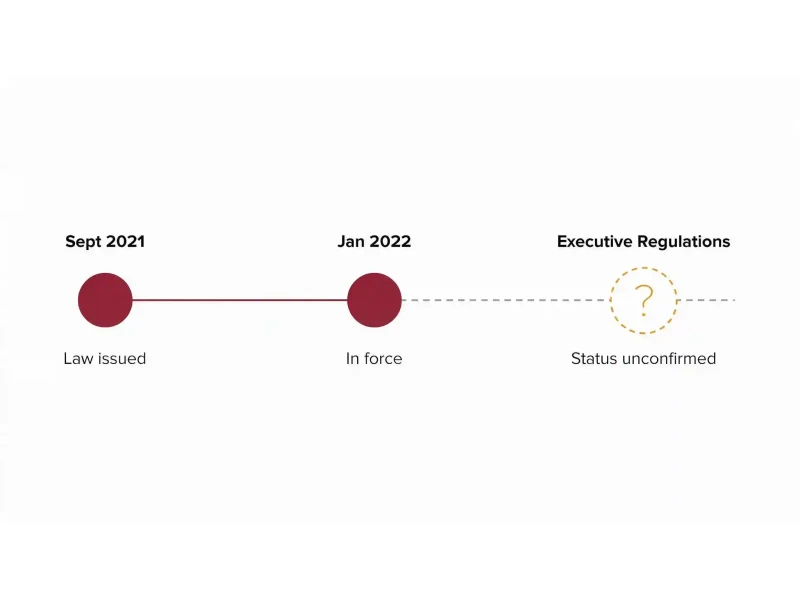
UAE PDPL compliance is not a future obligation. Federal Decree-Law No. 45 of 2021 has been in force since 2 January 2022, and it already binds any organisation processing the personal data of people in the UAE — including organisations based outside it. What has been missing is enforcement machinery, and that is now being assembled. This guide covers what the law asks of your infrastructure, and what the widely-quoted 2027 date does and does not mean.

Key takeaways
- The PDPL has applied since 2 January 2022. Treating compliance as a 2027 project misreads the position — the obligation exists now.
- The 1 January 2027 date is a planning milestone, not a confirmed statutory deadline. It rests on Executive Regulations that could not be verified against a primary source.
- The law reaches outside the UAE. Any organisation processing the personal data of people in the UAE falls in scope regardless of where it is based.
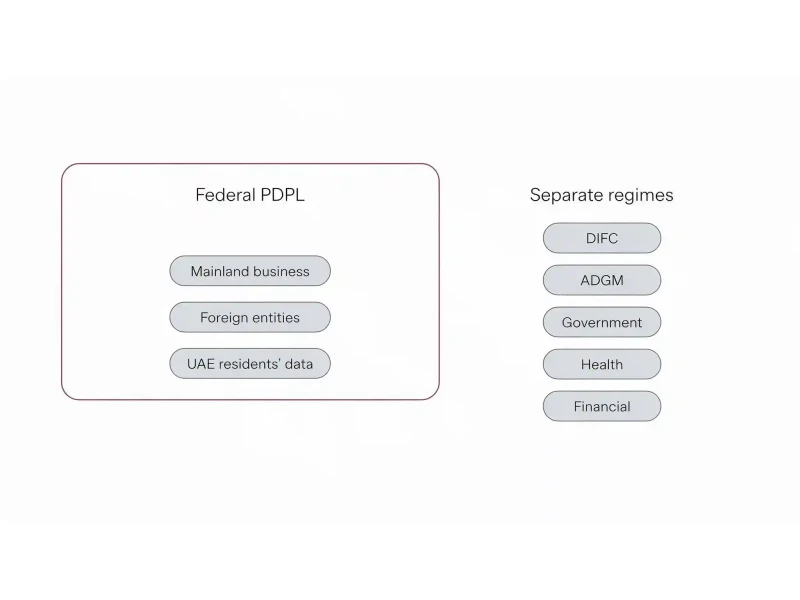
- DIFC and ADGM run separate regimes. Entities in those free zones follow their own data protection laws, not the federal PDPL.
- Breach notification is an infrastructure problem before it is a legal one. An obligation to report requires the capability to detect.
- Enforcement capacity is being built. The Cabinet approved a Federal Authority for Artificial Intelligence and Data in June 2026, consolidating oversight.
UAE PDPL compliance is already binding
Federal Decree-Law No. 45 of 2021 on the Protection of Personal Data was issued in September 2021 and entered into force on 2 January 2022. It is the UAE’s first federal baseline for personal data processing across the mainland, replacing a previously fragmented picture in which financial, healthcare and telecommunications sectors each followed their own rules and most of the private sector followed none.
That in-force date is the single most important fact in this article, because most published guidance frames PDPL as something arriving in the future. It is not. The obligations in the decree-law — lawful basis for processing, a documented record of processing activities, data subject rights, breach notification, controls on cross-border transfer — have been live for years.
What has genuinely been absent is the detailed implementing framework and an active enforcement body. That gap is what created the impression of a law waiting to start.
The 2027 question, answered honestly
You will find a great deal of guidance stating that UAE PDPL compliance becomes mandatory on 1 January 2027. Here is the actual position, and why we are not repeating that date as fact.
Article 28 of the decree-law required Executive Regulations to be issued within six months of its promulgation. Article 29 then gives controllers and processors six months from the issuance of those regulations to bring their operations into line, extendable by the Cabinet for one further period.
So the compliance clock is defined relative to the Executive Regulations. Everything depends on when — or whether — they were issued.
| Claim | Status |
|---|---|
| Decree-Law No. 45 of 2021 exists and is in force | Verified |
| In force since 2 January 2022 | Verified |
| Article 29 gives six months from Executive Regulations | Verified |
| Executive Regulations have been issued | Unconfirmed |
| Compliance mandatory from 1 January 2027 | Unconfirmed |
| Specific administrative fine amounts | Unconfirmed |
Sources reporting that the Executive Regulations have been issued attribute them to at least three different instruments and dates, and we could not trace any of those citations to a primary UAE government source. Meanwhile, independent reviews of the UAE Legislation portal report that the entry for the decree-law lists no related legislation, and the Government portal’s data protection page does not mention them.
The same caveat applies to the fine figures circulating widely. The decree-law itself does not set administrative fine amounts — it provides for the Cabinet to issue penalty schedules through the Executive Regulations. Quoted ranges therefore inherit exactly the same uncertainty, which is why this article does not repeat them.
What this means practically: treat 1 January 2027 as a sensible planning milestone, not a statutory certainty. Do not treat it as permission to wait, because the underlying obligations are already live. And confirm the current position with legal counsel and the relevant federal authority before making a compliance decision that depends on a date.
Who it applies to — and who is excluded
The scope is broad, and the exclusions are the part most organisations get wrong.
In scope: any controller or processor handling the personal data of individuals inside the UAE. Critically, this reaches organisations based outside the UAE if they process data on people within it. A business in London or Mumbai with UAE customers is in scope.
Outside the federal PDPL:
- DIFC and ADGM — both free zones operate their own standalone data protection laws. An entity established in DIFC follows DIFC Data Protection Law, not the federal PDPL.
- Government data and processing by government authorities
- Personal data held by security and judicial authorities
- Personal health data, where other legislation governs it
- Personal financial and credit data, likewise covered by separate regimes
That last group matters for infrastructure planning. A UAE hospital or bank is not exempt from data protection — it sits under a different and often stricter regime. Determining which framework applies is the first step, and for multi-entity groups the answer may differ between entities.
Seven infrastructure controls for UAE PDPL compliance
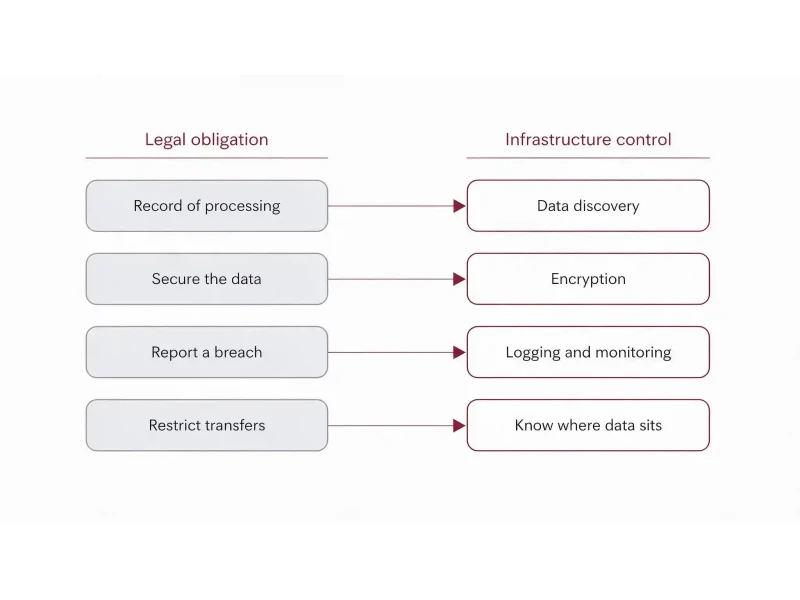
Most UAE PDPL compliance guidance is written by lawyers and stops at policy. These are the same obligations translated into what has to exist in the infrastructure.
Know where personal data physically lives
The law requires a documented record of processing activities. You cannot maintain one without knowing which systems, servers and storage hold personal data. Data discovery is the prerequisite for every other control on this list.
Encryption at rest and in transit
The law requires appropriate technical measures to secure personal data. Encryption of stored data and of data moving across networks is the baseline expectation, and it is verifiable in a way that policy documents are not.
Access control and segmentation
Restricting who can reach personal data, and separating systems that hold it from those that do not. Network segmentation limits both the likelihood and the blast radius of a breach — and makes the record of processing far easier to maintain.
Logging and monitoring
Breach notification obligations presuppose detection. Without logging across systems holding personal data, an organisation cannot know a breach occurred, let alone report it. This is covered in more detail below.
Retrievability for data subject rights
Individuals have rights to access, correct and erase their data. Delivering those requires systems where personal data can actually be located and extracted per individual — a genuine architectural constraint, not a policy statement.
Controls on cross-border transfer
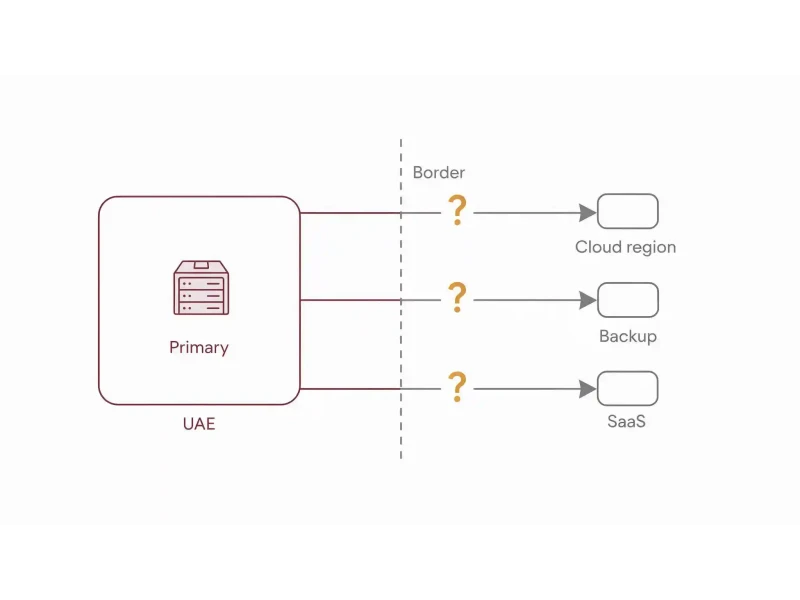
The law restricts transfer of personal data outside the UAE based on the destination’s level of protection. That requires knowing where data physically resides and where it replicates to — including backups and cloud regions.
Backup and recoverability
Protecting personal data includes protecting its availability and integrity, not just its confidentiality. A ransomware event that destroys personal data is a data protection failure as well as an operational one.
You cannot report a breach you cannot detect
This is the gap that most compliance programmes carry without noticing, because it falls between the legal team and the infrastructure team.
The PDPL requires controllers to notify the regulator when a breach compromises the privacy, confidentiality or security of personal data. Compliance guidance rightly focuses on notification timelines and procedures.
But a notification obligation is only meaningful if the organisation can tell that something happened. If systems holding personal data are not logged, if logs are not retained, and if nothing is monitoring them, a breach can run for months undetected. The organisation is then non-compliant not because it failed to report, but because it had no capacity to know.
Logging
Systems holding personal data need to generate access and event logs. Without them there is no record of what was reached, by whom, or when.
Monitoring
Logs that nobody reviews detect nothing. Automated monitoring and alerting turn a passive record into an actual detection capability.
Retention
Investigating a breach means reconstructing what happened. Logs need to be retained long enough to be useful after discovery, which is frequently well after the event.
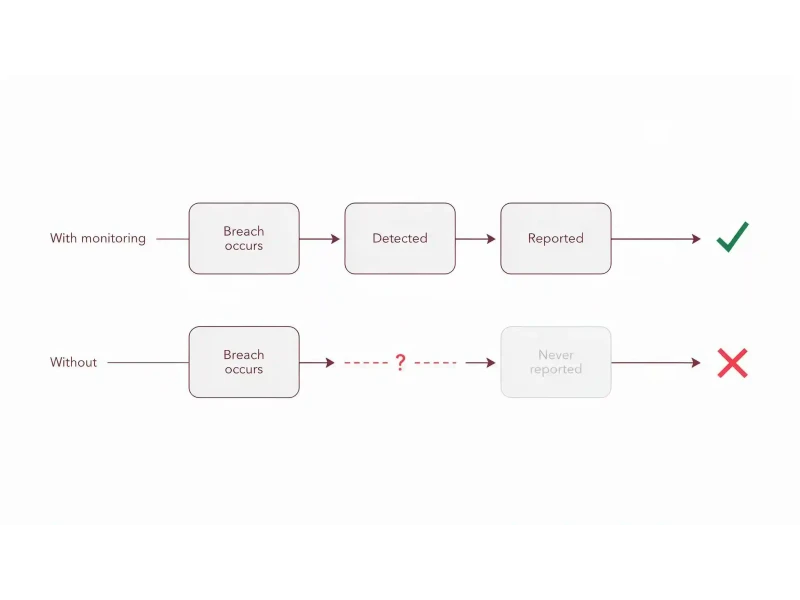
The practical consequence for an infrastructure budget: firewall, endpoint and network monitoring are not optional extras alongside a compliance programme. They are what makes the compliance programme executable. Our cybersecurity solutions cover the detection layer, and our guide to next-generation firewalls explains where that visibility comes from.
Cross-border transfer and data residency
The decree-law addresses transfers of personal data outside the UAE, permitting them where the destination provides an adequate level of protection or where specific conditions are met.
For infrastructure, this converts into a question most organisations struggle to answer precisely: where does our personal data physically sit, and where does it go? That includes places people forget — cloud regions selected by default, disaster recovery replicas, managed service provider environments, SaaS platforms, and offsite backups.
Organisations that keep personal data on infrastructure they control, physically located in the UAE, have a much simpler answer than those whose data is distributed across cloud regions chosen for cost. That is not an argument that on-premise is always right — it is an argument for knowing, and being able to demonstrate, where the data is. Our server and storage solutions cover on-premise options where data residency is a driver.
Where to start
The sequence matters for UAE PDPL compliance, because most of these controls depend on the first one.
Establish which regime applies
Federal PDPL, DIFC, ADGM, or a sector-specific framework. For groups with multiple entities the answer can differ between them. Get this wrong and everything downstream is aimed at the wrong target.
Find the personal data
Which systems hold it, where those systems physically are, and where the data replicates to. This is unglamorous and it is the foundation of everything else.
Close the detection gap
Logging, monitoring and retention across systems holding personal data. Without this, breach notification obligations cannot be met even in principle.
Segment and control access
Separate systems holding personal data, restrict who can reach them, and document the restriction. This reduces both risk and the scope of what has to be monitored.
Verify encryption end to end
At rest and in transit, including backups. Backups are the most commonly missed leg.
Resolve the residency question
Document where personal data sits and where it crosses borders, including cloud regions and disaster recovery. Fix what cannot be justified.
Take legal advice on the timeline
Confirm the current Executive Regulations position with counsel rather than relying on published summaries, including this one.
Frequently asked questions
Is the UAE PDPL already in force?
Yes. Federal Decree-Law No. 45 of 2021 entered into force on 2 January 2022 and has applied since. The obligations in the decree-law are live now. What remains unclear is the status of the Executive Regulations that would provide detailed implementation requirements and penalty schedules.
Is 1 January 2027 a real compliance deadline?
Treat it as a planning milestone rather than a confirmed statutory deadline. The date derives from Executive Regulations whose issuance could not be confirmed against a primary UAE government source, and published guidance citing it attributes it to at least three different instruments. Confirm the current position with legal counsel before relying on any date.
Does the PDPL apply to companies outside the UAE?
Yes. The law applies to any controller or processor handling the personal data of individuals inside the UAE, regardless of where that organisation is established. A business based abroad with UAE customers falls within scope.
Does the PDPL apply in DIFC and ADGM?
No. Both free zones operate their own standalone data protection laws, and entities established there follow those regimes rather than the federal PDPL. For groups with entities in multiple jurisdictions, the applicable framework has to be determined entity by entity.
What are the fines for non-compliance?
The decree-law does not set administrative fine amounts in the statute itself; it provides for the Cabinet to issue penalty schedules through the Executive Regulations. Because the status of those regulations could not be verified, the specific figures circulating in published guidance carry the same uncertainty and are not repeated here.
What does PDPL require technically, not just as policy?
In infrastructure terms: knowing where personal data resides, encryption at rest and in transit, access control and segmentation, logging and monitoring sufficient to detect a breach, the ability to retrieve data per individual for rights requests, control over cross-border transfer including backups, and recoverability.
Why does breach notification depend on infrastructure?
Because an obligation to report a breach assumes the organisation can tell one occurred. If systems holding personal data are not logged and monitored, a breach can go undetected indefinitely. The failure then is not late reporting but an absence of any capacity to detect.
Should we wait for the Executive Regulations before acting?
No. The decree-law is already in force, and the controls it implies — data discovery, encryption, access control, logging, recoverability — are sound security practice regardless of regulatory timing. Organisations that build them now will not need to rush when the implementation detail is confirmed.
Building the infrastructure the law assumes
Whatever the enforcement timeline turns out to be, the technical foundations are the same: know where personal data is, control who reaches it, encrypt it, detect when something goes wrong, and be able to recover it. None of that is wasted work under any version of the timeline.
Magnus supplies firewalls and network security, on-premise server and storage for data residency, and segmentation-capable switching across our cybersecurity solutions range. Tell us which systems hold personal data and our pre-sales team will help specify the controls around them.
Get a quoteSource and limitations
The governing instrument is Federal Decree-Law No. 45 of 2021 on the Protection of Personal Data, issued September 2021 and in force from 2 January 2022. Article 28 provides for Executive Regulations; Article 29 allows controllers and processors six months from their issuance to regularise their position, extendable once by the Cabinet.
Stated limitation: at the time of writing, the issuance of the Executive Regulations could not be confirmed against a primary UAE government source. Independent reviews report that the UAE Legislation portal entry for the decree-law lists no related legislation and that the Government portal's data protection page does not reference them. Secondary sources asserting that they have been issued conflict on both the instrument and the date. Their absence from those sources is not proof that none exists — readers should verify with the UAE Data Office or the relevant federal authority. Consequently this article does not state a compliance deadline or specific administrative fine amounts, both of which depend on those regulations.
On 14 June 2026 the UAE Cabinet approved the establishment of a Federal Authority for Artificial Intelligence and Data, consolidating federal oversight of artificial intelligence, digital government and data regulation.
This guide is general information for infrastructure planning and is not legal advice. Obtain advice from qualified counsel on your organisation's specific obligations.